Total Number of Basic Groups in Lysine Form
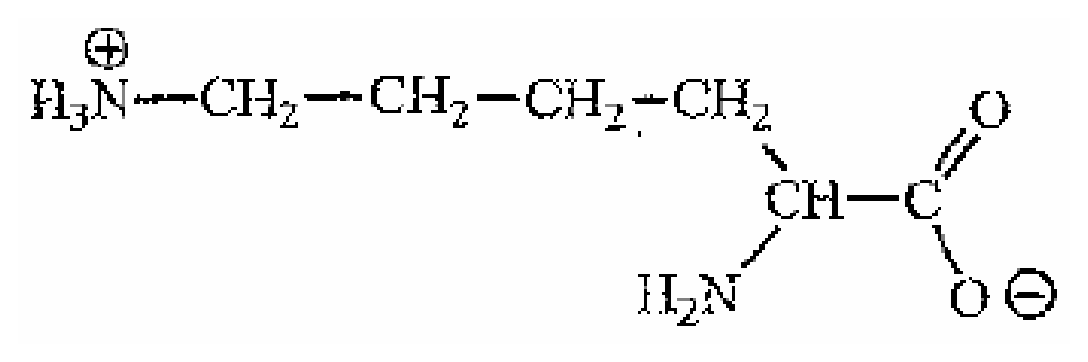
The total number of basic groups in the following form of lysine is
Topics & Concepts
Step-by-Step Solution
To determine the total number of basic groups in the given form of lysine, we analyze the structure provided:
A basic group, according to the Brønsted-Lowry definition, is a chemical species capable of accepting a proton () due to the presence of an available lone pair of electrons or a negative charge.
Let's evaluate each functional group present in the structure:
-
Unprotonated -amino group ():
The nitrogen atom has a lone pair of electrons that can readily accept a proton to form . Therefore, it acts as a basic group. -
Carboxylate anion ():
The carboxylate group possesses a negative charge and can accept a proton to convert into a neutral carboxylic acid group (). Therefore, it acts as a basic group. -
Protonated -amino group ():
This group is already protonated and carries a positive charge without any available lone pair for accepting another proton. Thus, it acts as an acidic group (proton donor), not a basic group.
Thus, the total number of basic groups in the given form of lysine is ( and ).