Total Contributing Hyperconjugation Structures of Cyclohexyl Substituted Carbocation
The total number of contributing structures showing hyperconjugation (involving C-H bonds) for the following carbocation is
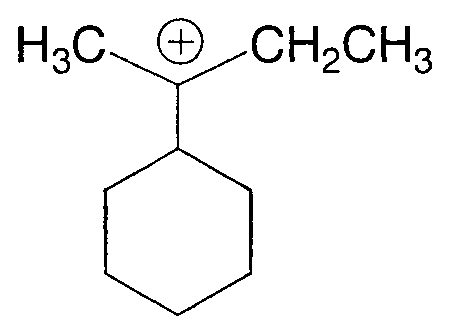
Topics & Concepts
Step-by-Step Solution
To determine the total number of contributing hyperconjugation structures (involving bonds) for the given carbocation, we identify all the -hydrogens (hydrogens attached to the -hybridized carbon atoms directly adjacent to the positively charged -hybridized carbocation carbon):
-
Identification of the carbocation center:
The central positively charged carbon () is bonded to three groups:- A methyl group ()
- An ethyl group ()
- A cyclohexyl group ()
-
Counting the -hydrogens ():
-
From the methyl group ():
The carbon is directly attached to the carbocation center and has bonds.
-
From the ethyl group ():
Only the methylene carbon directly attached to the carbocation center contributes -hydrogens. The terminal methyl group contains -hydrogens which do not directly participate in hyperconjugation with the carbocation.
-
From the cyclohexyl ring:
The ring carbon directly bonded to the carbocation center is bonded to two adjacent ring carbons, the carbocation center, and one hydrogen atom. Thus, this -carbon possesses bond.
-
-
Total number of contributing structures:
Each bond can participate in hyperconjugation ( orbital interaction, also known as no-bond resonance) to form one contributing hyperconjugation structure.
Therefore, the total number of contributing structures showing hyperconjugation involving bonds is 6.