Motion of Square Wire Loop Through Magnetic Field Region
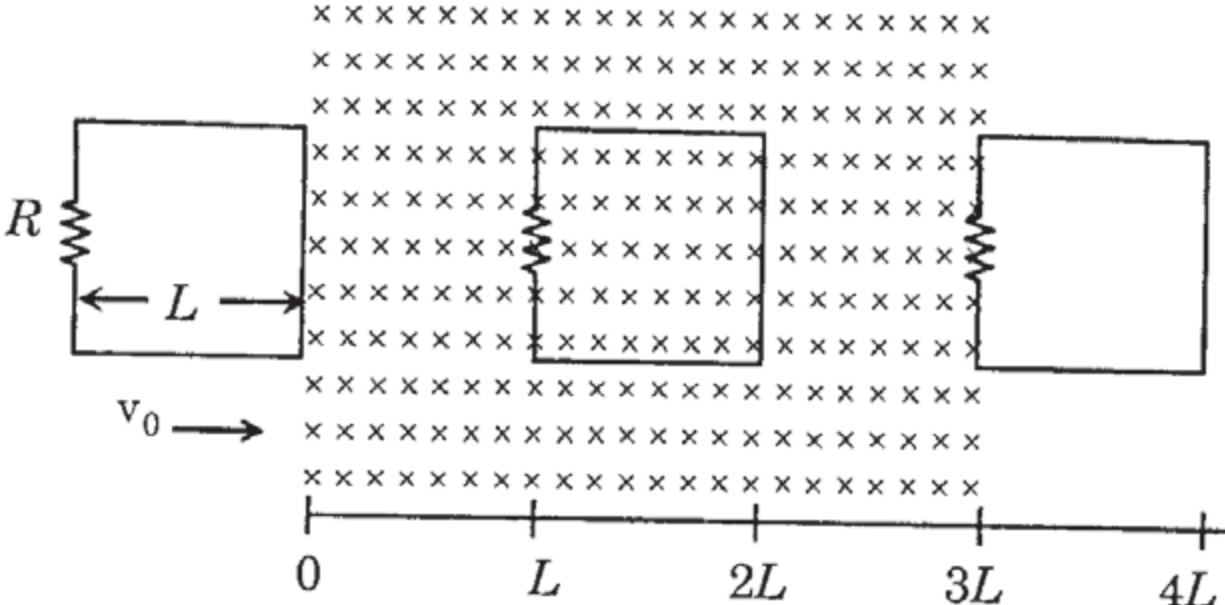
A square rigid loop made of wire with side length and resistance moves along the -axis with an initial velocity within the plane of the paper. At time , the front edge enters a region of length containing a uniform magnetic field directed into the page, as depicted in the diagram. Assuming is large enough, the loop successfully traverses the region. Let denote the coordinate of the right edge of the loop. Let , , and represent the loop's velocity, electric current, and net magnetic force as functions of , respectively. Define counter-clockwise current as positive.
Which of the following schematic plot(s) is(are) correct? (Ignore gravity)
Options
Topics & Concepts
Step-by-Step Solution
To determine the correct schematic plots for the velocity , current , and force , we analyze the motion of the square loop of side length , mass , and resistance through the three distinct regions defined by the coordinate of its right edge.
1. Region I: (Loop entering the magnetic field)
-
Magnetic Flux:
As the loop enters the uniform magnetic field region ( into the page), the length of the loop inside the field is . The magnetic flux into the page is: -
Induced EMF and Current:
By Faraday's law, the induced electromotive force is: By Lenz's law, to oppose the increase of magnetic flux into the page, the induced current generates an outward magnetic field. Thus, the current flows in a counter-clockwise (positive) direction: -
Magnetic Force:
The current flows upwards in the right edge of the loop. The magnetic force acting on this segment is directed to the left (retarding force): -
Equation of Motion:
Using :Integrating from to :
Substituting into the expression for current:
- decreases linearly with .
- is positive and decreases linearly as increases from to .
2. Region II: (Loop completely inside the field)
-
Magnetic Flux:
The loop is completely submerged in the magnetic field, so the magnetic flux through it is constant: -
Induced EMF, Current, and Force:
Since : -
Velocity:
With zero net force, the velocity remains constant:
3. Region III: (Loop exiting the magnetic field)
-
Magnetic Flux:
The length of the loop remaining inside the field is . The magnetic flux into the page is: -
Induced EMF and Current:
The flux into the page is decreasing: By Lenz's law, the induced current generates an inward magnetic field to oppose this decrease. Thus, the current flows in a clockwise (negative) direction: -
Magnetic Force:
The current flows downwards in the left edge of the loop. The magnetic force acting on this segment is again directed to the left: -
Equation of Motion:
Substituting into :
- continues to decrease linearly in this interval.
- is negative at and, as decreases, becomes less negative (increases linearly towards zero as ).
- remains negative (retarding) throughout this region as well.
Conclusion & Selection of Correct Options:
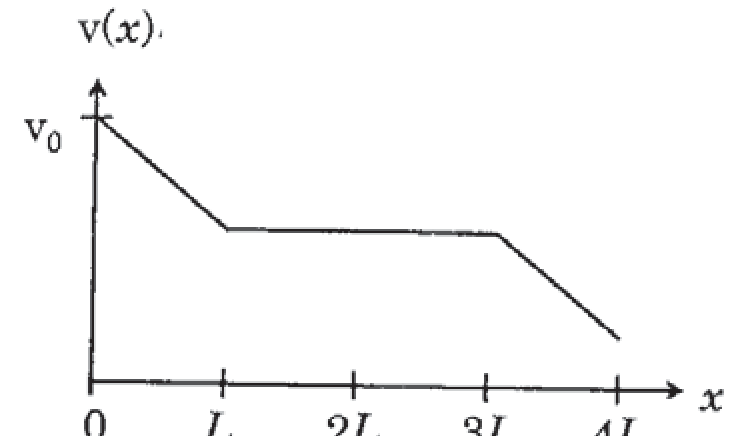
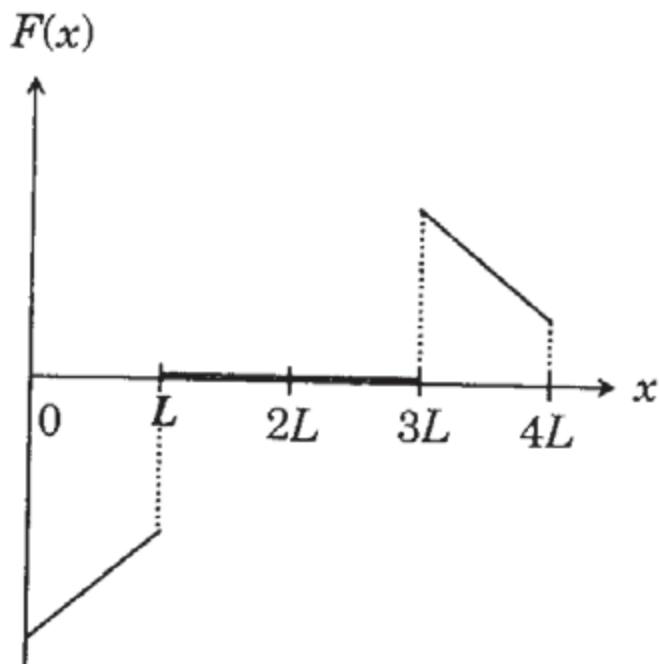
- Velocity [Plot (A)]: Linearly decreases in , remains constant in , and linearly decreases in . (Plot A is CORRECT)
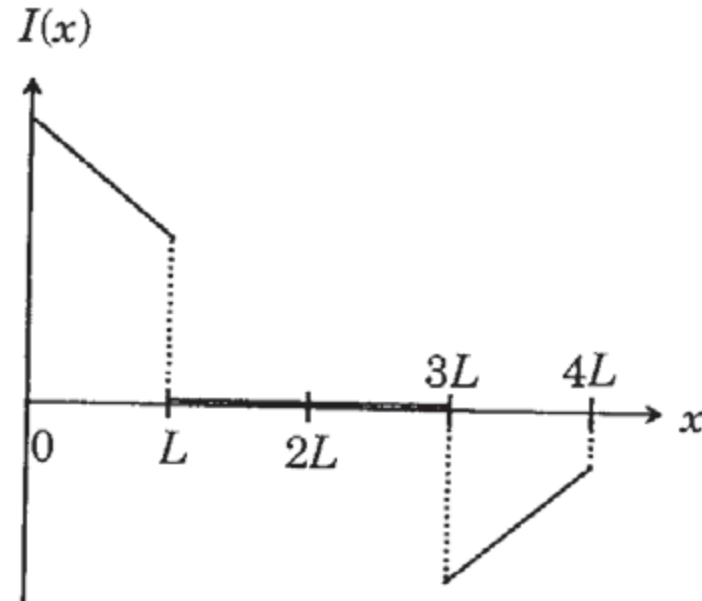
- Current [Plot (B)]: Positive and linearly decreasing in , zero in , and negative moving linearly towards zero in . (Plot B is CORRECT)
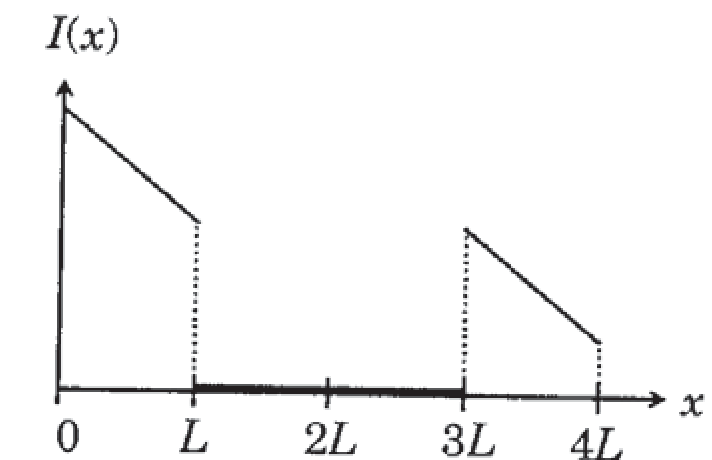
- Current [Plot (C)]: Incorrectly shows positive current in . (Plot C is INCORRECT)
- Force [Plot (D)]: Incorrectly shows positive force in (magnetic force always opposes motion). (Plot D is INCORRECT)
Correct Options: A and B