Match Organic Reactions with Reaction Types and Reactive Intermediates
Match the reactions in column I with appropriate types of steps/reactive intermediate involved in these reactions as given in column II.
Column I
(A)
(B)
(C)
(D)
Column II
(p) Nucleophilic substitution
(q) Electrophilic substitution
(r) Dehydration
(s) Nucleophilic addition
(t) Carbanion
Options
A
B
C
D
Correct
Step-by-Step Solution
To match the reactions in Column I with the appropriate steps and intermediates in Column II, let us analyze the mechanism for each reaction:
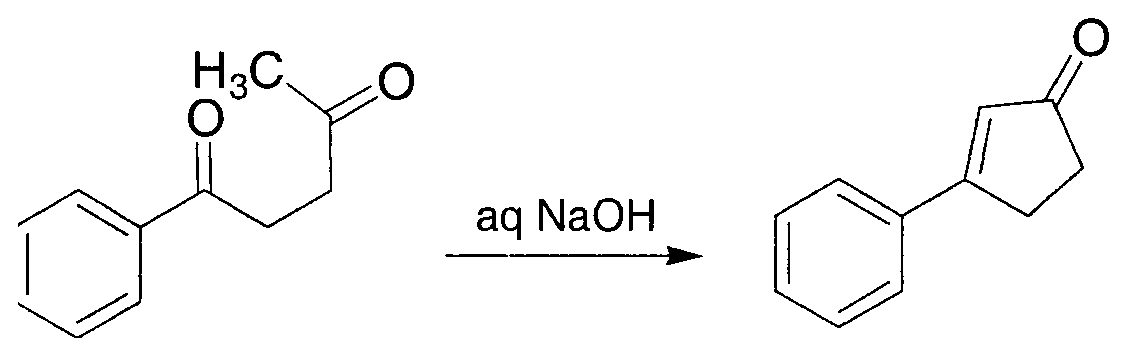
- Reaction (A):
- Mechanism: This is an intramolecular aldol condensation.
- The base abstracts an -proton from the terminal methyl ketone group to generate a resonance-stabilized carbanion .
- The carbanion undergoes an intramolecular nucleophilic addition onto the benzoyl carbonyl group to form a 5-membered cyclic alkoxide/aldol intermediate.
- Subsequent loss of a water molecule via base-catalyzed elimination constitutes a dehydration step yielding the conjugated cyclic -unsaturated ketone.
- Matching:
- Mechanism: This is an intramolecular aldol condensation.
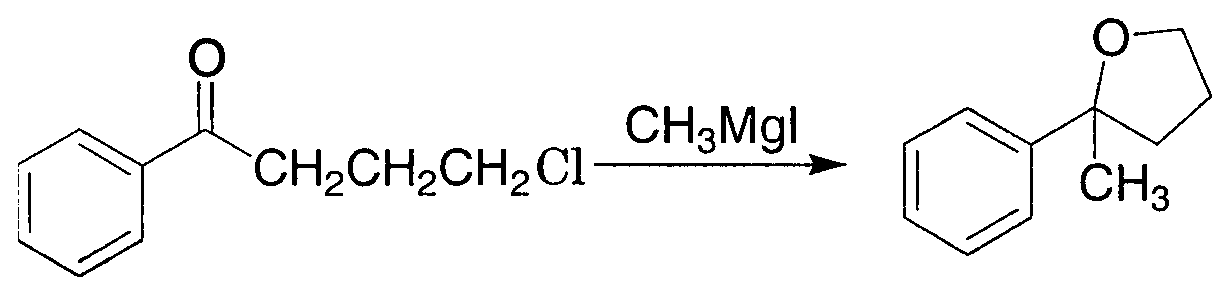
- Reaction (B):
- Mechanism:
- The methyl group from the Grignard reagent () attacks the carbonyl carbon via nucleophilic addition , forming a haloalkoxide intermediate .
- The alkoxide oxygen atom acts as an internal nucleophile and displaces the chloride ion in an intramolecular step (nucleophilic substitution, ) to close the tetrahydrofuran ring.
- Matching:
- Mechanism:
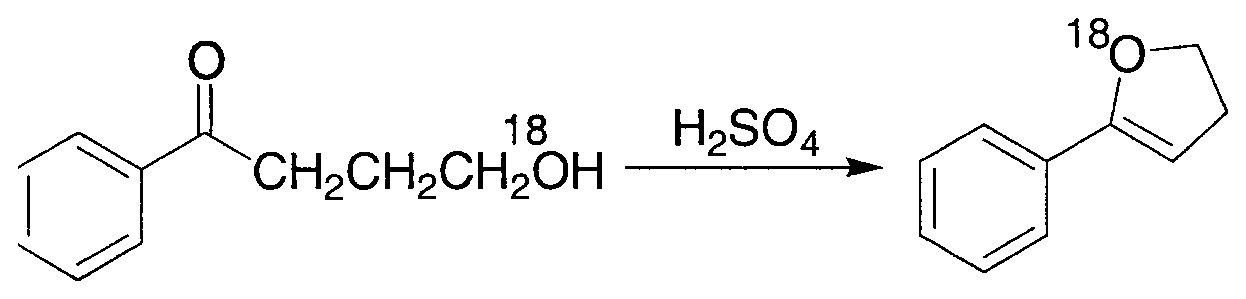
- Reaction (C):
- Mechanism:
- The carbonyl oxygen is protonated in the acidic medium, and the labeled group attacks the carbonyl carbon via intramolecular nucleophilic addition , forming a cyclic hemiacetal containing the atom in the ring.
- Protonation of the remaining group followed by elimination of a water molecule (dehydration, ) gives the enol ether.
- Matching:
- Mechanism:
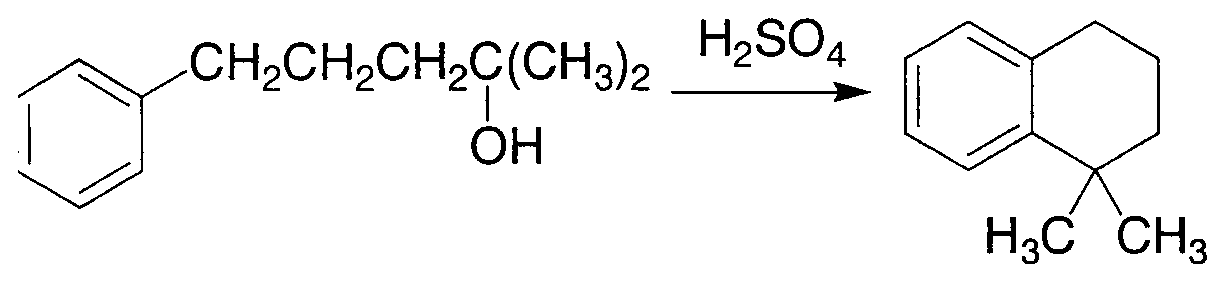
- Reaction (D):
- Mechanism:
- The tertiary alcohol group is protonated and loses a molecule of (dehydration, ) to generate a stable tertiary carbocation .
- The carbocation acts as an electrophile and attacks the aromatic ring via an intramolecular electrophilic aromatic substitution to form the fused tetralin ring system.
- Matching:
- Mechanism: