Intramolecular Aldol Condensation Reaction Product Identification
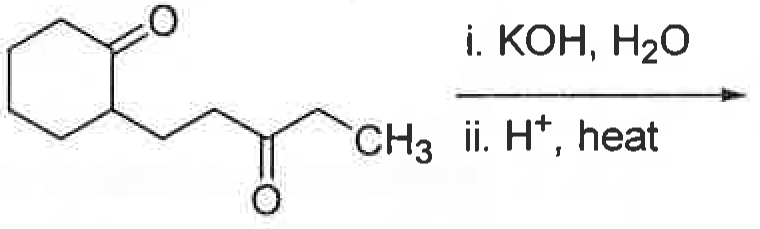
What will be the primary organic product formed in the given reaction sequence?
Options
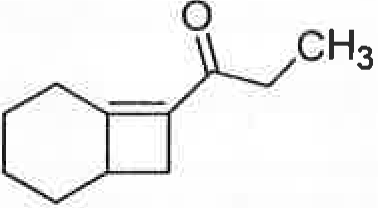
Topics & Concepts
Step-by-Step Solution
To determine the major organic product formed in the given reaction sequence, we analyze the reaction step-by-step:
1. Identification of the Starting Material
The starting material is 2-(3-oxopentyl)cyclohexan-1-one, a dicarbonyl compound possessing two ketone carbonyl groups:
- The ring carbonyl group at of the cyclohexanone ring.
- The side-chain carbonyl group () of the 3-oxopentyl group.
2. Base-Catalyzed Intramolecular Aldol Reaction ()
Under basic conditions, hydroxide () abstracts an -hydrogen from the dicarbonyl compound to form an enolate intermediate. To minimize ring strain, intramolecular nucleophilic attack favors the formation of a stable 6-membered ring.
There are two potential pathways to form a 6-membered ring:
Pathway A (Attack from the side-chain -carbon, ):
-
Enolate Formation: Base abstracts an -proton from the group () adjacent to the side-chain carbonyl to form a nucleophilic enolate ion:
-
Intramolecular Addition: The nucleophilic carbon () attacks the electrophilic carbonyl carbon () of the cyclohexanone ring:
-
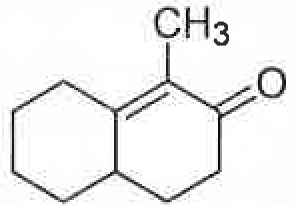
Protonation: Protonation of the resulting alkoxide yields a -hydroxy ketone intermediate (aldol product) possessing a fused bicyclic [6,6] system (decalin derivative) with a hydroxyl group at , a methyl group at , and a carbonyl group at .
3. Acid-Catalyzed Dehydration (, heat)
In the second step, treatment with acid and heat causes dehydration of the -hydroxy ketone via an or mechanism:
- The hydroxyl group at and an -proton from are eliminated as a water molecule ().
- This forms a stable, highly substituted, fully conjugated -unsaturated ketone (enone) system.
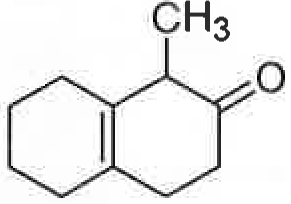
- The resulting double bond is positioned at the ring junction between and , with the methyl group () attached directly to the double bond.
Conclusion
The pathway forming the fused [6,6] bicyclic system with an -unsaturated ketone bearing a methyl group at the double bond is thermodynamically favored and matches Option (A).
Correct Answer: A