Identification of Alkene Structure for Compound I
Comprehension Passage
Paragraph for Question Nos. 58 to 60
A tertiary alcohol upon acid catalysed dehydration gives a product . Ozonolysis of leads to compounds and . Compound upon reaction with gives benzyl alcohol and a compound , whereas on reaction with gives only .
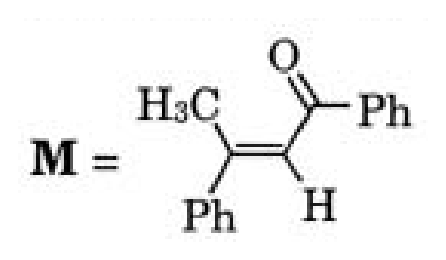
The structure of compound is
Options
A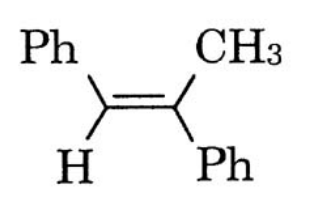 Correct
B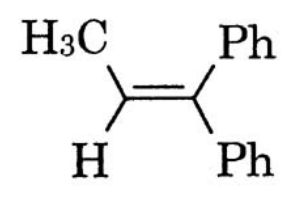
C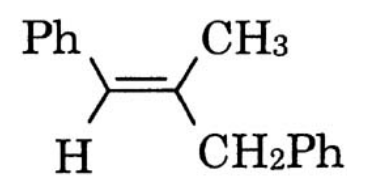
D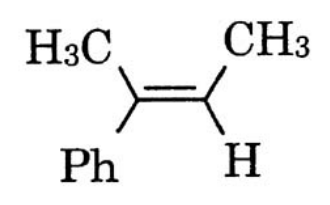
Topics & Concepts
Step-by-Step Solution
Based on the reaction sequence (from JEE Advanced 2008):
-
Analysis of the Reaction Sequence:
- A tertiary alcohol undergoes acid-catalysed dehydration to form an alkene .
- Ozonolysis of the alkene yields two carbonyl compounds, and .
- Compound reacts with to undergo the Cannizzaro reaction, yielding benzyl alcohol () and potassium benzoate (), identifying:
- Consequently, the second ozonolysis product is acetophenone:
-
Deduction of Alkene Structure :
- Cleavage of the alkene double bond during ozonolysis yields and :
- Recombining the fragments gives the connectivity of the alkene:
- In this alkene, one carbon is bonded to and , while the other carbon is bonded to and .
- Acid-catalysed dehydration of the tertiary alcohol predominantly forms the thermodynamically more stable stereoisomer, where the bulky phenyl groups are oriented trans to each other across the double bond to minimize steric repulsion.
- Cleavage of the alkene double bond during ozonolysis yields and :
-
Evaluation of the Options:
- (A) Shows with the two bulky phenyl groups trans to each other.
- (B) Represents , which upon ozonolysis would yield and .
- (C) Represents , which upon ozonolysis would yield and .
- (D) Represents , which upon ozonolysis would yield and .
Therefore, the structure of compound is given by option (A).
Correct Answer: A