Identification of Aliphatic Aldehydes P and Q
Paragraph for Questions 12 to 14.
Two aliphatic aldehydes P and Q react in the presence of aqueous to give compound R, which upon treatment with HCN provides compound S. On acidification and heating, S gives the product shown below :
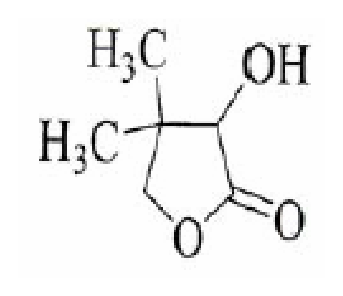
The compounds P and Q respectively are
Options
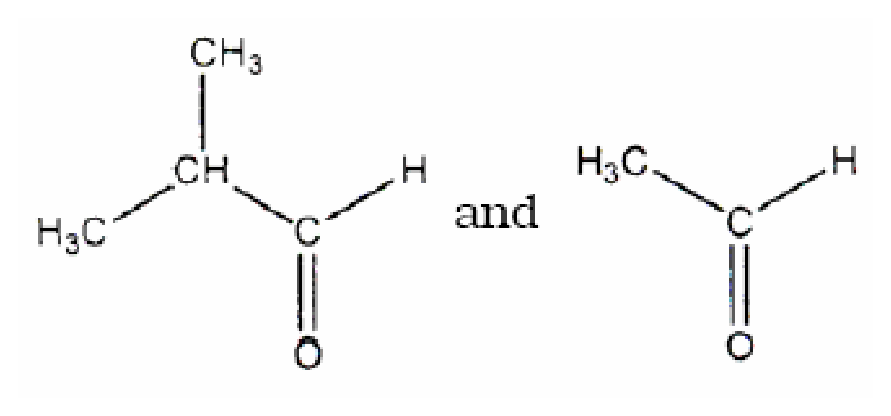
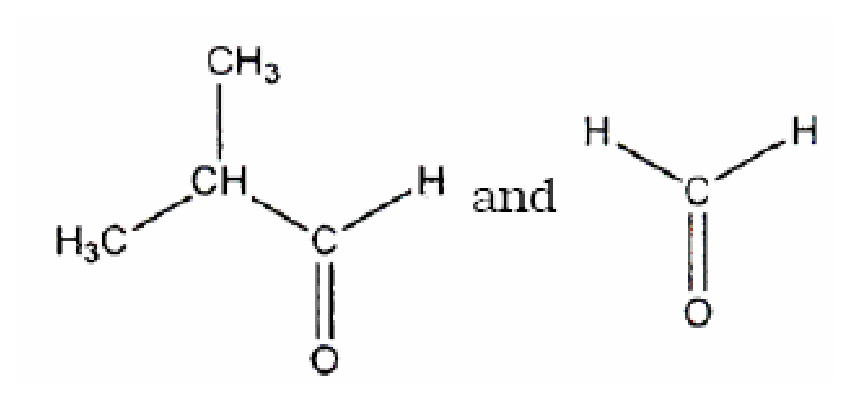
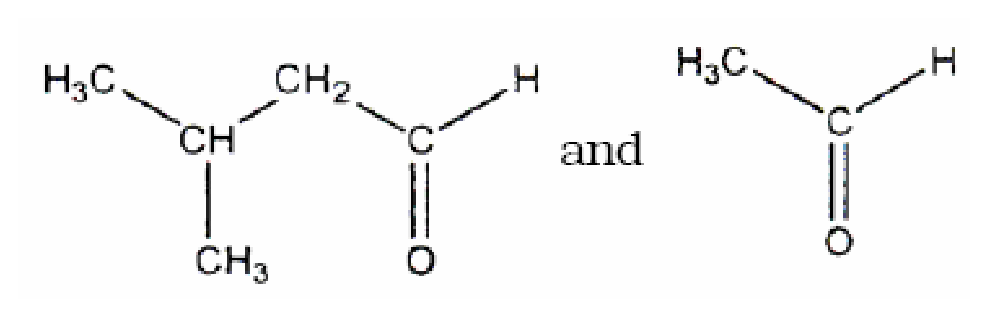
Topics & Concepts
Step-by-Step Solution
To determine the structures of the aliphatic aldehydes and , we can perform a retrosynthetic analysis starting from the final product.
Step 1: Analysis of the Final Product
The final product shown is a 5-membered -lactone with a hydroxyl group and two methyl substituents:
The formation of a lactone occurs when a molecule containing both a carboxylic acid group () and a hydroxyl group () undergoes intramolecular esterification upon heating in acidic medium.
Opening the lactone ring gives the precursor -dihydroxy carboxylic acid:
Step 2: Identification of Compound
Compound undergoes acidification () and heating () to yield the lactone. Since acidification of a cyanohydrin hydrolyzes the nitrile group () into a carboxylic acid group (), compound must be the cyanohydrin derivative:
Step 3: Identification of Compound
Cyanohydrins are formed by the nucleophilic addition of to an aldehyde or ketone. Since has a group, compound must contain an aldehyde group () at that carbon:
Step 4: Identification of Aldehydes and
Compound is a -hydroxy aldehyde formed via a crossed-aldol reaction between two aldehydes and in the presence of aqueous :
-
Enolate donor (Nucleophile): 2-Methylpropanal (isobutyraldehyde), , has one -hydrogen. Deprotonation by forms the carbanion:
-
Electrophile: Formaldehyde, , has no -hydrogens and is extremely reactive towards nucleophilic attack.
-
Aldol Addition:
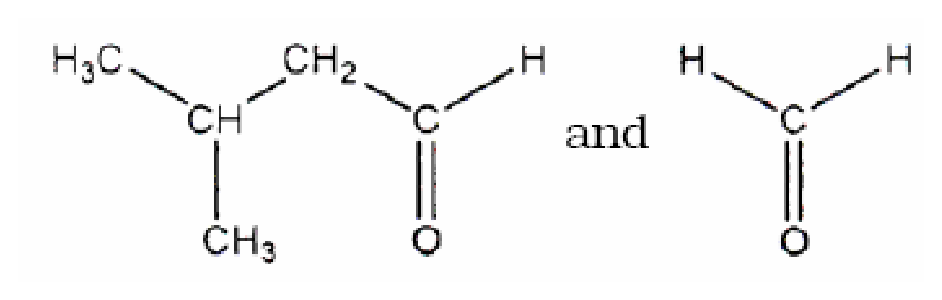
Thus, the two aliphatic aldehydes and are:
This corresponds to Option B.