Frictional Force vs Applied Force Graph on Inclined Plane
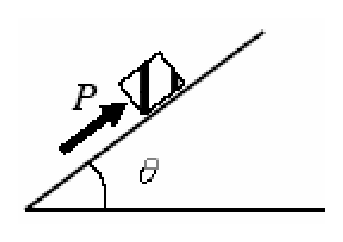
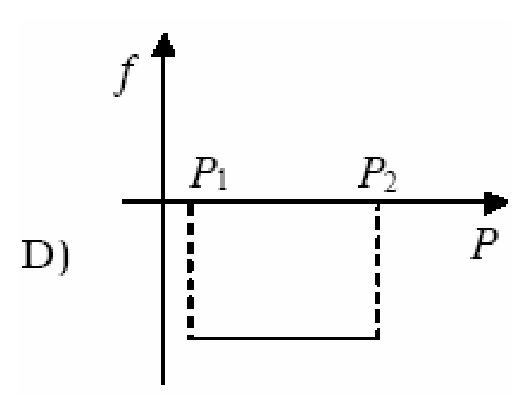
A block of mass is on an inclined plane of angle . The coefficient of friction between the block and the plane is and . The block is held stationary by applying a force parallel to the plane. The direction of force pointing up the plane is taken to be positive. As is varied from to , the frictional force versus graph will look like
Options
Topics & Concepts
Step-by-Step Solution
To find the relationship between the frictional force and the applied force , let us analyze the forces acting on the block along the inclined plane.
Let the direction pointing up the inclined plane be the positive -direction. The forces acting along the incline are:
- The component of gravity acting down the incline:
- The applied external force acting up the incline:
- The static frictional force: (taken along the incline with sign indicating its direction)
Since the block remains stationary throughout the range of applied force from to , it is in static equilibrium. The net force acting along the inclined plane must be zero:
Solving for the frictional force :
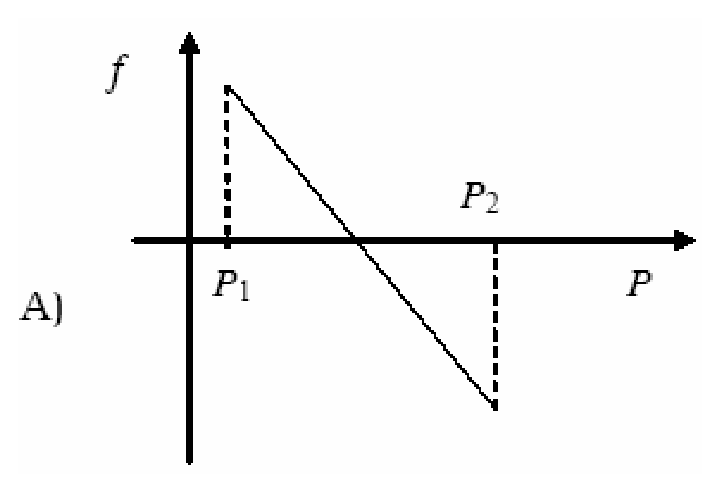
This equation represents a linear relationship between and with a constant negative slope of .
Evaluating at the boundaries:
-
At the minimum applied force, :
The frictional force is positive (directed up the incline) and reaches its maximum static value to prevent the block from slipping downward. -
At :
The applied force exactly balances the component of gravity, so no friction is required. -
At the maximum applied force, :
The frictional force is negative (directed down the incline) and reaches its maximum static value to prevent the block from slipping upward.
Thus, as increases from to , the frictional force decreases linearly from a positive value , passes through zero, and ends at a negative value .
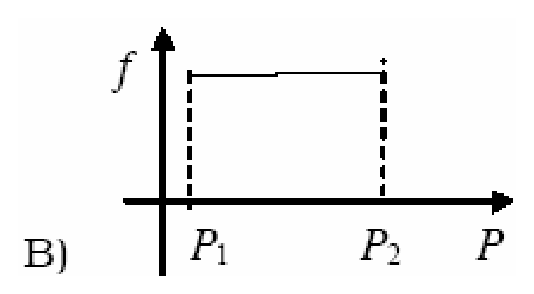
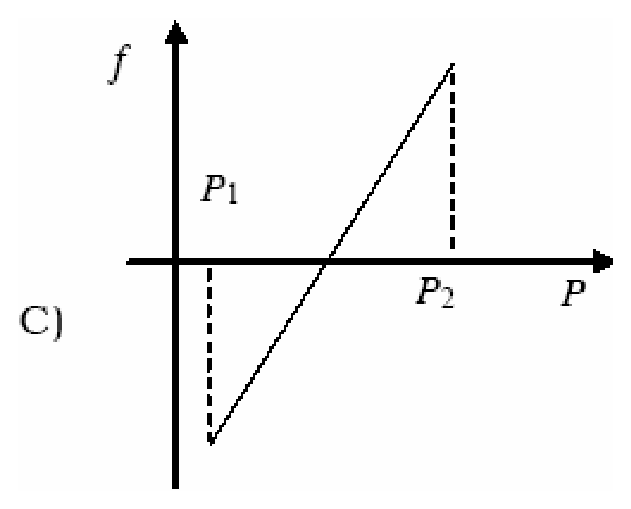
This corresponds to the straight line with a negative slope shown in Option A.