Acetylation of 3 Aminomethylbenzamide with Acetic Anhydride
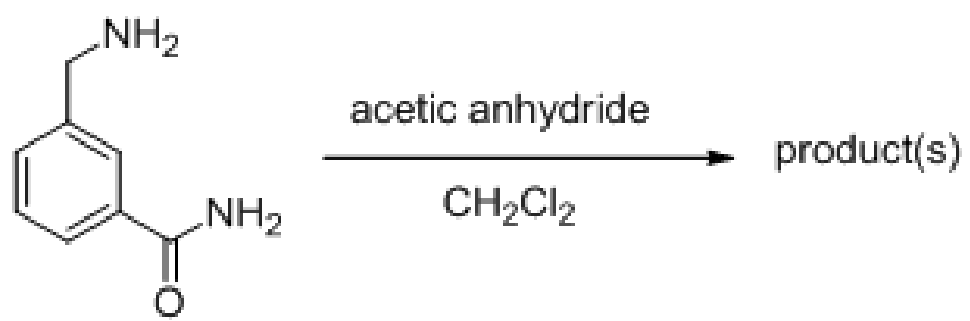
In the chemical reaction illustrated below, identify the major product(s) formed:
Options
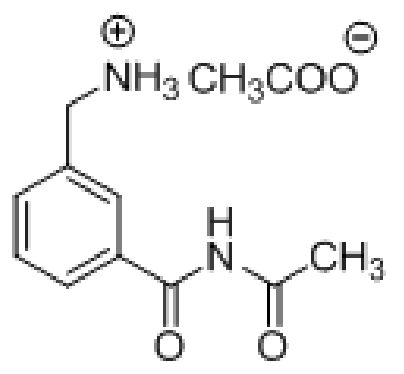
Step-by-Step Solution
To determine the major product formed in the reaction, we analyze the functional groups present in the starting material, 3-(aminomethyl)benzamide:
-
Aliphatic Primary Amine group (): The lone pair of electrons on the nitrogen atom of the primary aliphatic amine is localized on the nitrogen atom. This makes it a strong nucleophile and readily available to attack electrophilic centers.
-
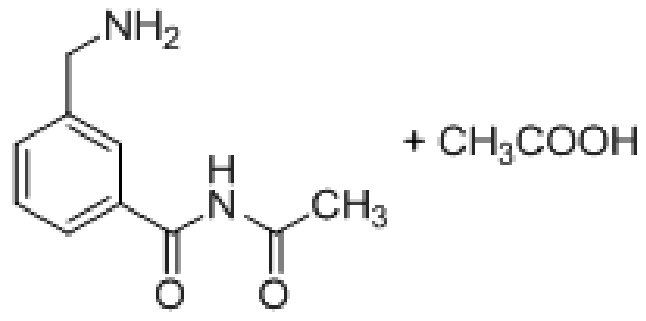
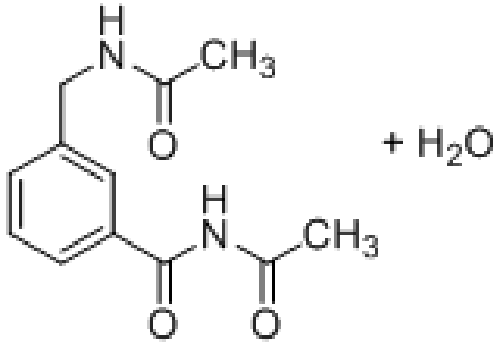
Primary Amide group (): The lone pair of electrons on the nitrogen of the amide group is delocalized via resonance with the adjacent carbonyl group: Due to this resonance stabilization, the electron density on the amide nitrogen is significantly reduced, rendering it extremely weakly nucleophilic compared to an amine.
When reacted with acetic anhydride () in dichloromethane () under mild conditions:
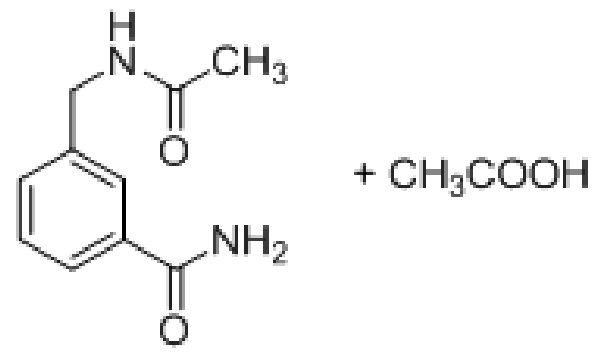
- The nucleophilic acyl substitution selectively occurs at the more nucleophilic aliphatic amine () rather than the amide group ().
- The amino group attacks the carbonyl carbon of acetic anhydride, eliminating a molecule of acetic acid () and yielding the acetylated amine (), while the amide group remains intact.
Therefore, the major product is represented by Option (A).
Correct Option: (A)