Synthesis of Propane via Major Product Organic Reactions
Select the reaction(s) that yield propane as the primary product:
Options
A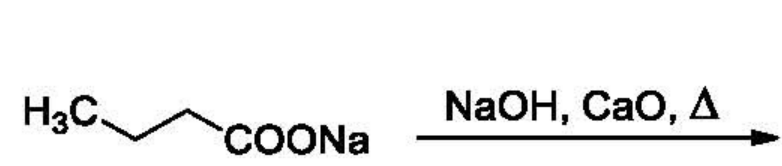 Correct
B
C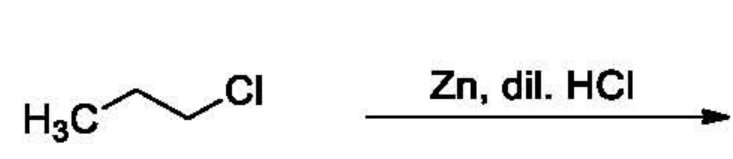 Correct
D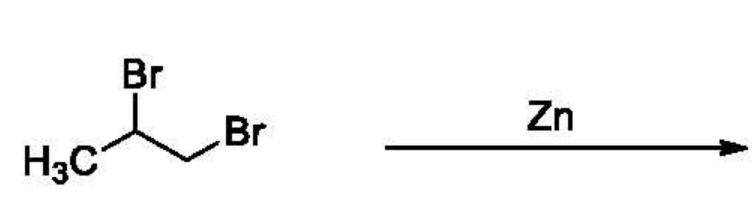 Correct
Topics & Concepts
Step-by-Step Solution
To determine which of the given reactions yield propane () as a major product, we analyze each reaction option step-by-step:
Option (A): Soda-Lime Decarboxylation
- Reactant: Sodium salt of butanoic acid, (Sodium butanoate).
- Reagent: Soda-lime () and heat ().
- Reaction:
- Explanation: Heating the sodium salt of a carboxylic acid with soda-lime causes decarboxylation, removing the carboxylate group as sodium carbonate (). This produces an alkane containing one less carbon atom than the parent carboxylate salt. Starting with 4-carbon sodium butanoate yields 3-carbon propane as the major product.
- Result: Produces propane.
Option (B): Kolbe's Electrolysis
- Reactant: Aqueous solution of sodium butanoate, .
- Reaction:
- Explanation: Electrolysis of an aqueous solution of sodium carboxylate leads to decarboxylation at the anode to form alkyl free radicals (). Two such propyl radicals dimerize to yield a symmetrical alkane, -hexane (), as the major product.
- Result: Does NOT produce propane.
Option (C): Reduction of Monohalide with Zinc and Acid
- Reactant: 1-chloropropane ().
- Reagent: Zinc and dilute hydrochloric acid ().
- Reaction:
- Explanation: Treatment of alkyl halides with zinc metal in an acidic medium leads to reduction of the carbon-halogen bond to form the corresponding alkane. Here, 1-chloropropane is reduced directly to propane.
- Result: Produces propane.
Option (D): Reduction of Geminal Dihalide
- Reactant: 2,2-dibromopropane ().
- Reagent: Zinc ().
- Reaction:
- Explanation: Geminal dihalides (gem-dihalides) undergo complete reduction upon treatment with active metals like zinc to form the corresponding alkane, replacing both halogen atoms with hydrogen atoms to produce propane.
- Result: Produces propane.
Conclusion:
The reactions in options A, C, and D produce propane as the major product.
Correct Options: A, C, D