Synthesis and Identification of Amino Acid T
Upon reaction of compound O with , compound P is formed, which when heated with ammonia yields Q. Treatment of compound Q with produces R. When strongly heated, Q yields S, which upon subsequent reaction with ethyl 2-bromopropanoate in the presence of followed by acidification, gives compound T.
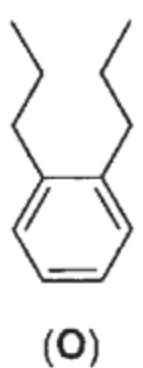
Identify compound T.
Options
glycine
alanine
valine
serine
Topics & Concepts
Step-by-Step Solution
To determine the identity of compound T, we trace the reaction sequence step by step starting from compound O:
-
Oxidation of Compound O to Compound P: Compound O is -dipropylbenzene (an ortho-dialkylbenzene). Vigorous oxidation of -dipropylbenzene using acidic potassium permanganate () cleaves the alkyl side-chains at the benzylic position to yield phthalic acid (benzene--dicarboxylic acid) as compound P:
-
Formation of Compound Q: Reaction of phthalic acid (P) with ammonia () followed by heating gives phthalamide (Q):
-
Formation of Compound S: Strong heating of phthalamide (Q) results in the elimination of a molecule of ammonia (), leading to cyclization and formation of phthalimide (S):
-
Gabriel Phthalimide Synthesis to form Compound T: Phthalimide (S) undergoes a Gabriel synthesis reaction:
- Treatment with deprotonates the imide nitrogen to form potassium phthalimide:
- Potassium phthalimide undergoes an nucleophilic substitution reaction with ethyl -bromopropanoate () to yield -(1-ethoxycarbonylethyl)phthalimide.
- Subsequent acidic hydrolysis (acidification) cleaves the amide linkage and hydrolyzes the ethyl ester group, releasing phthalic acid and the -amino acid alanine ():
Thus, compound T is alanine.
Correct Option: B