Matching Organic Compounds with Their Chemical Reaction Types
Match each of the compounds given in Column I with the reaction(s), that they can undergo, given in Column II.
Column I
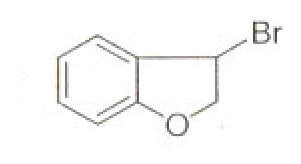
(A)
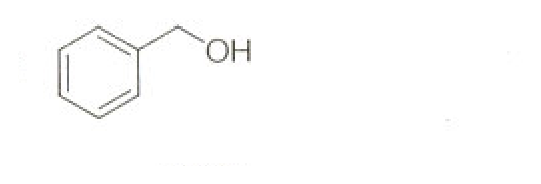
(B)
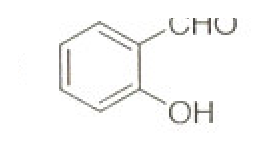
(C)
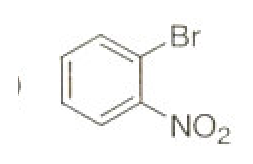
(D)
Column II
(p) Nucleophilic substitution
(q) Elimination
(r) Nucleophilic addition
(s) Esterification with acetic anhydride
(t) Dehydrogenation
Options
A
B
C
Correct
D
Step-by-Step Solution
To determine the correct matches between the compounds in Column I and the reactions they can undergo in Column II, we analyze the chemical structure and reactivity of each compound:
1. Compound (A): 3-bromo-2,3-dihydrobenzofuran
- Structure: A bicyclic system comprising a benzene ring fused to a dihydrofuran ring with a bromine substituent at the benzylic position (C-3) and adjacent hydrogens at C-2.
- Reactions:
- (p) Nucleophilic substitution: The bromine atom is at a benzylic position, making it highly reactive toward nucleophilic substitution reactions ( or ) to form substituted derivatives.
- (q) Elimination: In the presence of a base (such as alcoholic ), it readily undergoes dehydrohalogenation (elimination of ) involving the benzylic bromide and the -hydrogen at C-2 to generate the fully aromatic benzofuran ring.
- (t) Dehydrogenation: Catalytic dehydrogenation (loss of ) can occur across the saturated positions of the dihydrofuran ring to aromatize the system.
- Matches: (A) p, q, t
2. Compound (B): Benzyl alcohol ()
- Structure: A primary alcohol attached to a phenyl ring.
- Reactions:
- (p) Nucleophilic substitution: The hydroxyl group () can be substituted by halides or other nucleophiles upon protonation or conversion into a good leaving group (e.g., using , , or concentrated ).
- (s) Esterification with acetic anhydride: As a primary alcohol, it readily reacts with acetic anhydride () in the presence of an acid or base catalyst to form benzyl acetate (an ester).
- (t) Dehydrogenation: Primary alcohols undergo dehydrogenation over heated catalysts (e.g., at ) by losing to yield benzaldehyde:
- Matches: (B) p, s, t
3. Compound (C): Salicylaldehyde (2-hydroxybenzaldehyde)
- Structure: Contains both an aromatic aldehyde group () and a phenolic hydroxyl group ().
- Reactions:
- (r) Nucleophilic addition: The carbonyl carbon of the aldehyde group undergoes characteristic nucleophilic addition reactions (e.g., with , , or Grignard reagents).
- (s) Esterification with acetic anhydride: The phenolic group is acetylated upon reaction with acetic anhydride to produce an ester (specifically, 2-formylphenyl acetate).
- Matches: (C) r, s
4. Compound (D): 4-Bromonitrobenzene (-bromonitrobenzene)
- Structure: An aryl halide with a strong electron-withdrawing nitro group () located para to the bromine atom.
- Reactions:
- (p) Nucleophilic substitution: Due to the strong (mesomeric) and (inductive) effects of the para-nitro group, the carbon bearing the halogen is activated toward nucleophilic aromatic substitution () via the Meisenheimer complex intermediate (e.g., substitution of by or ).
- Matches: (D) p
Final Matching:
- (A) p, q, t
- (B) p, s, t
- (C) r, s
- (D) p