Match Standing Wave Systems with Wave Properties and Wavelength
Column I shows four systems, each of the same length L, for producing standing waves. The lowest possible natural frequency of a system is called its fundamental frequency, whose wavelength is denoted as . Match each system with statements given in Column II describing the nature and wavelength of the standing waves.
Column I
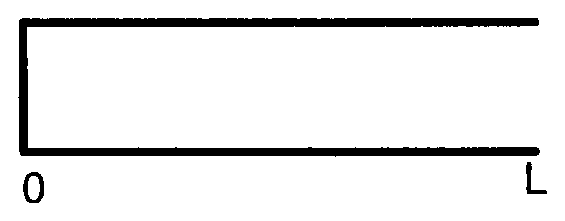
(A) Pipe closed at one end
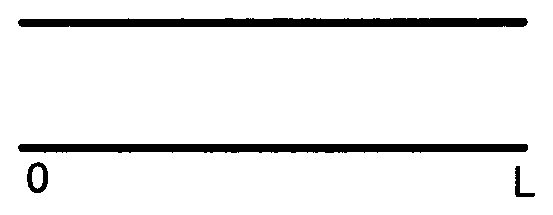
(B) Pipe open at both ends
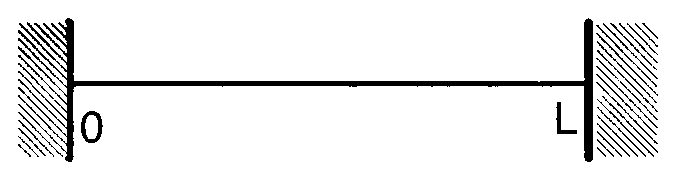
(C) Stretched wire clamped at both ends
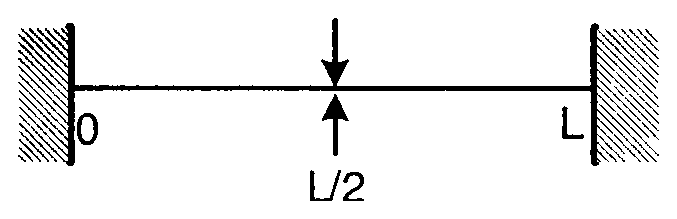
(D) Stretched wire clamped at both ends and at mid-point
Column II
(p) Longitudinal waves
(q) Transverse waves
(r)
(s)
(t)
Options
Topics & Concepts
Step-by-Step Solution
To match each system in Column I with its appropriate wave properties and fundamental wavelength in Column II, we analyze the nature of the waves (longitudinal vs. transverse) and the boundary conditions for each standing wave system:
System (A): Pipe closed at one end
- Wave Nature: Sound waves in air columns are pressure/displacement waves that oscillate parallel to the direction of wave propagation, making them longitudinal waves (p).
- Fundamental Wavelength (): A closed pipe of length has a displacement node at the closed end () and a displacement antinode at the open end (). For the fundamental mode (lowest natural frequency):
Thus, (A) (p, t).
System (B): Pipe open at both ends
- Wave Nature: Waves inside the open pipe are sound waves in air, which are longitudinal waves (p).
- Fundamental Wavelength (): An open pipe of length has displacement antinodes at both open ends ( and ) and a single node at the center. For the fundamental mode:
Thus, (B) (p, s).
System (C): Stretched wire clamped at both ends
- Wave Nature: Waves on a stretched string/wire oscillate perpendicular to the length of the string, making them transverse waves (q).
- Fundamental Wavelength (): Clamped fixed ends force displacement nodes at and . The fundamental mode contains a single antinode at the center:
Thus, (C) (q, s).
System (D): Stretched wire clamped at both ends and at mid-point
- Wave Nature: Standing waves on a stretched wire are transverse waves (q).
- Fundamental Wavelength (): Clamping the wire at , , and forces fixed displacement nodes at these points, dividing the wire into two independent segments each of length . For the lowest possible natural frequency of this clamped system, each segment vibrates in its fundamental mode:
Thus, (D) (q, r).
Final Matching Summary:
- (A) p, t
- (B) p, s
- (C) q, s
- (D) q, r