Identification of Unstable Organic Molecules at Room Temperature
Which among the provided molecules in pure state are unstable when kept at room temperature?
Options
A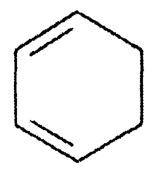
B Correct
C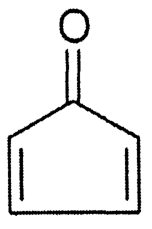 Correct
D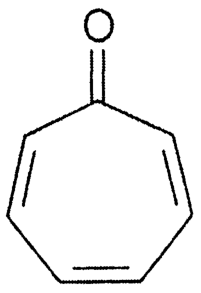
Step-by-Step Solution
To determine which of the given molecules are unstable in their pure state at room temperature, we analyze the aromaticity, resonance stabilization, and ring strain associated with each compound:
-
Molecule (A) - Cyclohexa-1,3-diene:
- It is a six-membered cyclic conjugated diene.
- It has electrons in a non-aromatic, non-planar cyclic system.
- The ring strain is minimal, and it is a stable, standard conjugated diene at room temperature (boiling point ).
-
Molecule (B) - Cyclobutadiene:
- It is a four-membered planar cyclic conjugated system containing electrons.
- According to Hückel's rule, a cyclic, planar, fully conjugated system with electrons () is antiaromatic.
- Due to extreme antiaromatic destabilization combined with severe ring strain, cyclobutadiene is exceptionally reactive and spontaneously undergoes self-Diels-Alder dimerization even at cryogenic temperatures (). Therefore, it cannot exist as a pure compound at room temperature and is unstable.
-
Molecule (C) - Cyclobut-2-en-1-one:
- It is a highly strained four-membered ring containing an enone system ().
- Polarization of the carbonyl group () gives a resonance structure with a carbocation in a four-membered ring, imparting antiaromatic character and high localized charge instability.
- Due to the combination of severe ring strain and antiaromatic resonance contribution, it readily undergoes rapid thermal dimerization and polymerization at room temperature in its pure state, making it unstable.
-
Molecule (D) - Tropone (Cyclohepta-2,4,6-trien-1-one):
- The dipolar resonance structure of tropone involves polarization of the carbonyl bond:
- The resulting ring cation is the tropylium ion, which has electrons ( with ) delocalized over a 7-membered ring.
- This confers significant aromatic stability to the molecule, making tropone stable at room temperature.
Thus, the molecules that are unstable in pure form at room temperature are (B) and (C).