Identification of the Chemical Structure of Product L
Comprehension Passage
Paragraph for Question Nos. 61 to 63
In the following reaction sequence, products , and are formed. represents a reagent.

The structure of product is
Options
A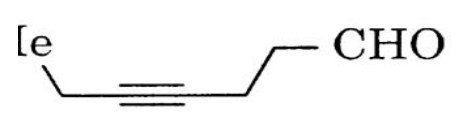
B
C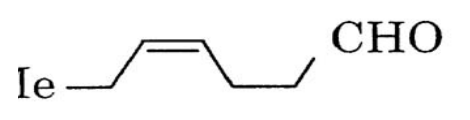 Correct
D
Topics & Concepts
Step-by-Step Solution
To determine the structure of product , we analyze the transformation and stereochemical outcome:
-
Analysis of the Structural Options:
- (A) contains an internal alkyne: (hex-4-ynal).
- (B) is fully saturated: (hexanal).
- (C) contains a cis (or )-alkene: -hex-4-enal.
- (D) contains a trans (or )-alkene: -hex-4-enal.
-
Reaction Pathway:
The synthesis involves stereoselective controlled hydrogenation of an internal alkyne precursor using Lindlar's catalyst ( or , poisoned with quinoline). -
Stereospecificity:
- Hydrogenation of an internal alkyne in the presence of Lindlar's catalyst proceeds via syn-addition of hydrogen across the triple bond to selectively produce the corresponding cis-alkene (-isomer).
- Complete reduction to an alkane is prevented by the deactivated catalyst, ruling out (B).
- The trans-alkene would require dissolving metal reduction (, Birch conditions), ruling out (D).
Thus, the reduction yields the cis-alkene structure shown in option (C).
Correct Answer: (C)