To determine the structures of compound J and reagent K, let us follow the reaction sequence step by step:
Formation of Compound I:
The starting material is hex-3-ynal: CH3−CH2−C≡C−CH2−CHO
Step 1: Reduction with NaBH4 selectively reduces the aldehyde group to a primary alcohol while leaving the internal carbon-carbon triple bond intact: CH3−CH2−C≡C−CH2−CHONaBH4CH3−CH2−C≡C−CH2−CH2OH
Step 2: Treatment with PBr3 converts the alcohol into an alkyl bromide: CH3−CH2−C≡C−CH2−CH2OHPBr3CH3−CH2−C≡C−CH2−CH2Br(I)
Formation of Compound J:
Step 1: Reaction of compound I with magnesium in dry ether forms the corresponding Grignard reagent: CH3−CH2−C≡C−CH2−CH2BrMg/etherCH3−CH2−C≡C−CH2−CH2MgBr
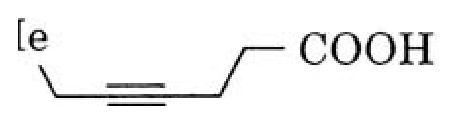
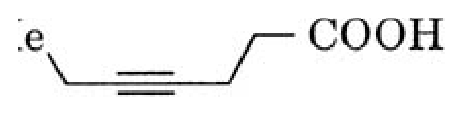
Step 2 & 3: Carboxylation with solid carbon dioxide (CO2) followed by acidic workup (H3O+) yields the carboxylic acid (hept-4-ynoic acid): CH3−CH2−C≡C−CH2−CH2MgBr1.CO22.H3O+CH3−CH2−C≡C−CH2−CH2−COOH(J)
Identification of Reagent K:
In the next transformation, the carboxylic acid J is converted into the corresponding acyl chloride: CH3−CH2−C≡C−CH2−CH2−COOHKCH3−CH2−C≡C−CH2−CH2−COCl
The standard reagent used to convert a carboxylic acid into an acyl chloride is thionyl chloride (SOCl2). Hence: K=SOCl2
Thus, compound J is the alkyne-containing carboxylic acid Me−CH2−C≡C−CH2−CH2−COOH and reagent K is SOCl2.

 Correct