JEE Challenger
More from Hydrocarbons

Determine Major Compound Y Obtained from Grignard Reaction and Elimination

Comprehension Passage

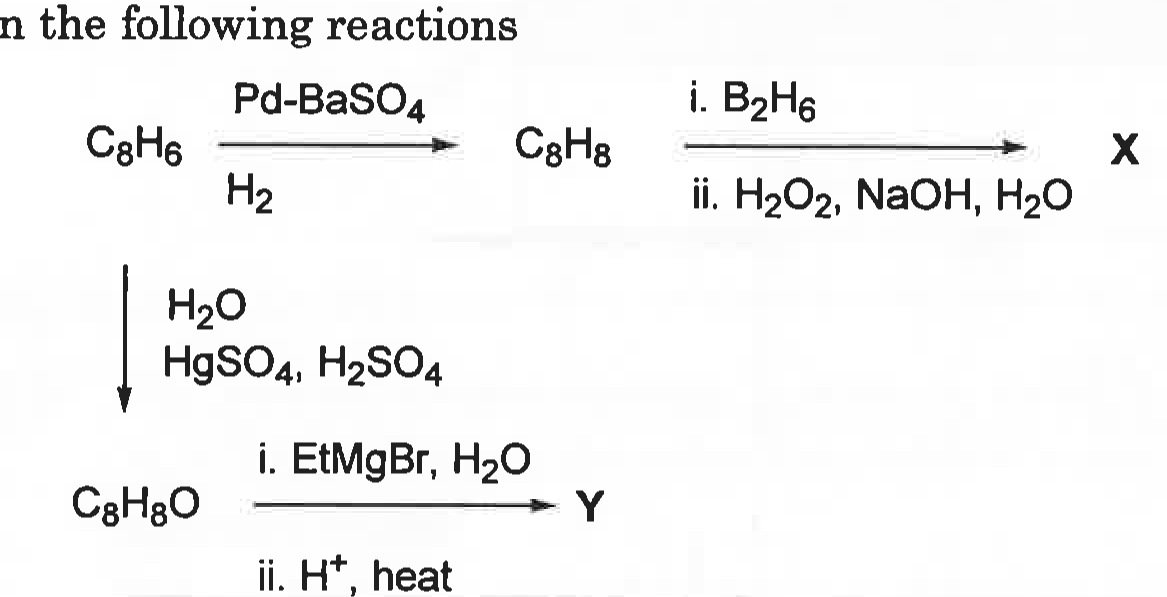
Consider the following sequence of organic transformations starting from C8H6\text{C}_8\text{H}_6:

Passage Diagram 1

Identify the structure of the primary compound Y\mathbf{Y} formed in this sequence.

Options

A
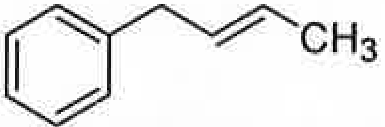
Option A Diagram 1
B
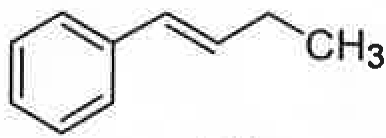
Option B Diagram 1
C
Option C Diagram 1
D
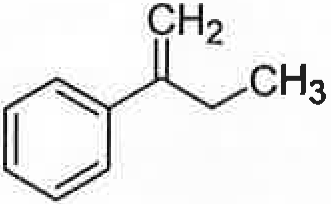
Option D Diagram 1
Correct

Step-by-Step Solution

To determine the structure of the major compound Y\mathbf{Y}, we analyze the reaction sequence step-by-step:

Step 1: Identification of the starting material C8H6\text{C}_8\text{H}_6

The molecular formula C8H6\text{C}_8\text{H}_6 has a degree of unsaturation (DU) calculated as: DU=C+1−H2=8+1−62=6\text{DU} = C + 1 - \frac{H}{2} = 8 + 1 - \frac{6}{2} = 6 Since it undergoes Oxymercuration-Demercuration/Hydration (using HgSO4/H2SO4\text{HgSO}_4 / \text{H}_2\text{SO}_4) and partial hydrogenation (using Pd-BaSO4/H2\text{Pd-BaSO}_4 / \text{H}_2), C8H6\text{C}_8\text{H}_6 contains a benzene ring (DU=4\text{DU} = 4) and a terminal alkyne group (DU=2\text{DU} = 2). Thus, C8H6\text{C}_8\text{H}_6 is phenylacetylene: Ph−C≡CH\text{Ph}-\text{C}\equiv\text{CH}


Step 2: Hydration of C8H6\text{C}_8\text{H}_6 to yield C8H8O\text{C}_8\text{H}_8\text{O}

Hydration of phenylacetylene using H2O/HgSO4/H2SO4\text{H}_2\text{O}/\text{HgSO}_4/\text{H}_2\text{SO}_4 follows Markovnikov's addition: Ph−C≡CH+H2O→Hg2+/H+Ph−C(OH)=CH2→TautomerizationPh−CO∣∣−CH3\text{Ph}-\text{C}\equiv\text{CH} + \text{H}_2\text{O} \xrightarrow{\text{Hg}^{2+}/\text{H}^+} \text{Ph}-\text{C}(\text{OH})=\text{CH}_2 \xrightarrow{\text{Tautomerization}} \text{Ph}-\overset{\underset{||}{\text{O}}}{\text{C}}-\text{CH}_3 The intermediate C8H8O\text{C}_8\text{H}_8\text{O} is acetophenone.


Step 3: Reaction of acetophenone with Grignard reagent (EtMgBr\text{EtMgBr}) followed by hydrolysis

Nucleophilic addition of ethylmagnesium bromide (CH3CH2MgBr\text{CH}_3\text{CH}_2\text{MgBr}) to acetophenone occurs as follows:

  1. The nucleophilic ethyl group (CH3CH2−\text{CH}_3\text{CH}_2^-) attacks the electrophilic carbonyl carbon of acetophenone: Ph−CO∣∣−CH3+CH3CH2MgBr⟶Ph−CO−MgBr+∣∣CH2CH3−CH3\text{Ph}-\overset{\underset{||}{\text{O}}}{\text{C}}-\text{CH}_3 + \text{CH}_3\text{CH}_2\text{MgBr} \longrightarrow \text{Ph}-\underset{\underset{\text{CH}_2\text{CH}_3}{|}}{\overset{\underset{|}{\text{O}^-\text{MgBr}^+}}{\text{C}}}-\text{CH}_3
  2. Acidic hydrolysis (H2O\text{H}_2\text{O}) yields the tertiary alcohol, 2-phenylbutan-2-ol: Ph−COH∣∣CH2CH3−CH3\text{Ph}-\underset{\underset{\text{CH}_2\text{CH}_3}{|}}{\overset{\underset{|}{\text{OH}}}{\text{C}}}-\text{CH}_3

Step 4: Dehydration (Elimination) using H+\text{H}^+, heat

Acid-catalyzed dehydration of 2-phenylbutan-2-ol proceeds via an E1\text{E1} mechanism:

  1. Protonation and loss of water: Ph−C(OH)(CH3)CH2CH3→H+Ph−C(OH2+)(CH3)CH2CH3→−H2OPh−C+(CH3)CH2CH3\text{Ph}-\text{C}(\text{OH})(\text{CH}_3)\text{CH}_2\text{CH}_3 \xrightarrow{\text{H}^+} \text{Ph}-\text{C}(\text{OH}_2^+)(\text{CH}_3)\text{CH}_2\text{CH}_3 \xrightarrow{-\text{H}_2\text{O}} \text{Ph}-\overset{+}{\text{C}}(\text{CH}_3)\text{CH}_2\text{CH}_3 This forms a highly stable benzylic carbocation.

  2. Deprotonation to form the alkene: Deprotonation can occur from either the −CH3-\text{CH}_3 group or the adjacent −CH2−-\text{CH}_2- group:

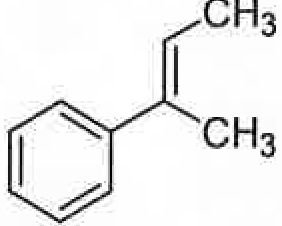
    • Deprotonation from the methylene (−CH2−-\text{CH}_2-) group yields the more substituted, highly conjugated alkene (Saytzeff product): Ph−C(CH3)=CH−CH3(2-phenylbut-2-ene)\text{Ph}-\text{C}(\text{CH}_3)=\text{CH}-\text{CH}_3 \quad (\text{2-phenylbut-2-ene})

Because 2-phenylbut-2-ene has extended π\pi-conjugation with the phenyl ring along with greater hyperconjugative stabilization, it is formed as the major product Y\mathbf{Y}.

This structure corresponds to option (D).