Validity of Electric and Magnetic Field Patterns
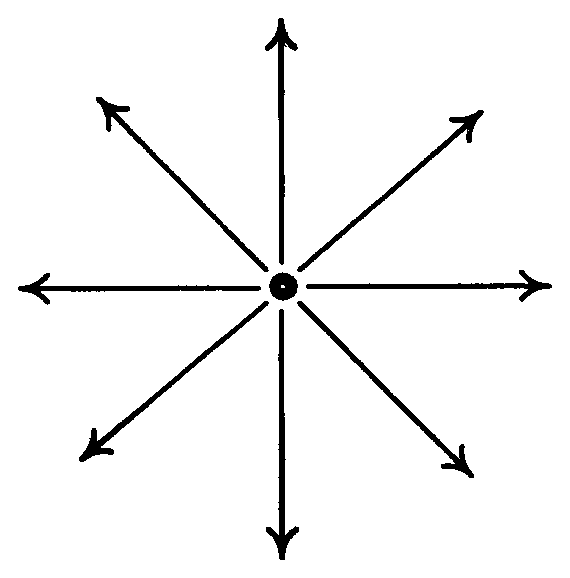
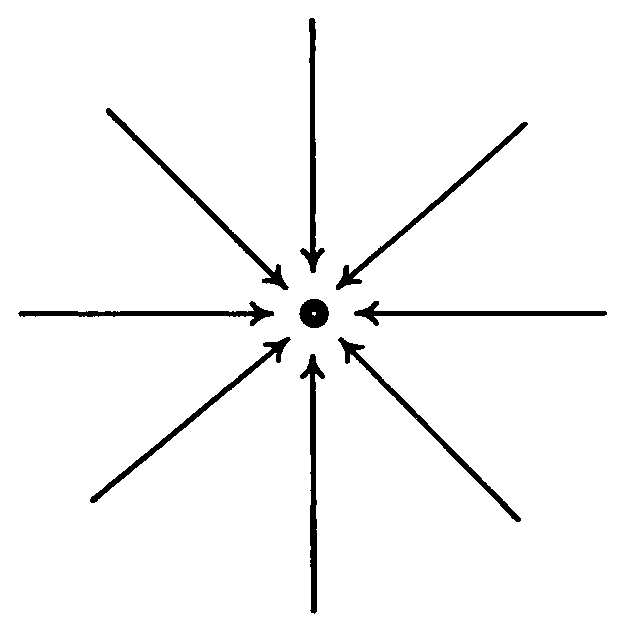
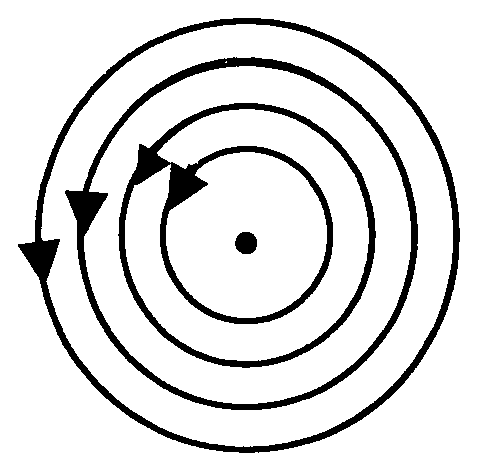
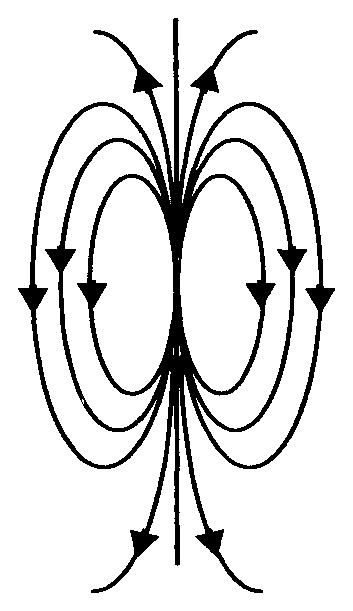
Which of the field patterns given below is valid for electric field as well as for magnetic field?
Options
Topics & Concepts
Step-by-Step Solution
To determine which field pattern can represent both an electric field () and a magnetic field (), we analyze the fundamental governing equations of electromagnetism (Maxwell's equations):
-
Gauss's Law for Magnetism:
This equation states that isolated magnetic monopoles do not exist. As a result, magnetic field lines must be continuous and cannot originate from or terminate at a single point source. This rules out field patterns (A) and (B) for magnetic fields, as they depict field lines diverging from or converging to a point source. -
Field Line Behavior for Electric Fields:
- An electrostatic field is conservative (), where field lines originate on positive charges and terminate on negative charges.
- An induced electric field is non-conservative () and is generated by a time-varying magnetic flux according to Faraday's Law of Induction:
In a region with cylindrical symmetry and a time-varying magnetic field (e.g., inside a solenoid with a changing current), the induced electric field lines form closed, concentric circles.
-
Field Line Behavior for Magnetic Fields:
- By Ampère's Circuital Law:
The magnetic field created by a long, straight, current-carrying wire perpendicular to a plane forms closed, concentric circular field lines centered on the conductor.
- By Ampère's Circuital Law:
-
Conclusion for Pattern (C):
- Pattern (C) shows closed concentric circular field lines.
- It represents a valid magnetic field generated by a steady electric current flowing perpendicular to the plane.
- It also represents a valid induced electric field created by a changing magnetic field directed perpendicular to the plane.
Therefore, pattern (C) is valid for both electric and magnetic fields.
Correct Answer: C