JEE Challenger
More from Alcohols, Phenols and Ethers

Properties and Reactions of By Product in Cumene Process

Reaction of iso-propylbenzene with O2\text{O}_2 followed by the treatment with H3O+\text{H}_3\text{O}^+ forms phenol and a by-product P\mathbf{P}. Reaction of P\mathbf{P} with 33 equivalents of Cl2\text{Cl}_2 gives compound Q\mathbf{Q}. Treatment of Q\mathbf{Q} with Ca(OH)2\text{Ca(OH)}_2 produces compound R\mathbf{R} and calcium salt S\mathbf{S}.

The correct statement(s) regarding P\mathbf{P}, Q\mathbf{Q}, R\mathbf{R} and S\mathbf{S} is(are)

Options

A

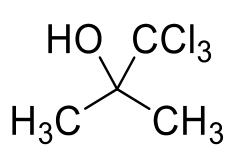
Reaction of P\mathbf{P} with R\mathbf{R} in the presence of KOH\text{KOH} followed by acidification gives

Option A
Correct
B

Reaction of R\mathbf{R} with O2\text{O}_2 in the presence of light gives phosgene gas

Correct
C

Q\mathbf{Q} reacts with aqueous NaOH\text{NaOH} to produce Cl3CCH2OH\text{Cl}_3\text{CCH}_2\text{OH} and Cl3CCOONa\text{Cl}_3\text{CCOONa}

D

S\mathbf{S} on heating gives P\mathbf{P}

Correct

Step-by-Step Solution

To determine the correct statements, let us trace the series of chemical reactions given in the problem step-by-step:

1. Identification of Compound P\mathbf{P}

In the industrial preparation of phenol via the cumene process, isoiso-propylbenzene (cumene) reacts with oxygen (O2\text{O}_2) to form cumene hydroperoxide. Subsequent treatment with aqueous acid (H3O+\text{H}_3\text{O}^+) results in the rearrangement and cleavage to produce phenol (C6H5OH\text{C}_6\text{H}_5\text{OH}) and acetone (CH3COCH3\text{CH}_3\text{COCH}_3) as a by-product. C6H5CH(CH3)2+O2C6H5C(CH3)2OOHH3O+C6H5OH+CH3COCH3By-product P\text{C}_6\text{H}_5\text{CH(CH}_3)_2 + \text{O}_2 \longrightarrow \text{C}_6\text{H}_5\text{C(CH}_3)_2\text{OOH} \xrightarrow{\text{H}_3\text{O}^+} \text{C}_6\text{H}_5\text{OH} + \underbrace{\text{CH}_3\text{COCH}_3}_{\text{By-product }\mathbf{P}}

Thus, compound P\mathbf{P} is acetone (CH3COCH3\text{CH}_3\text{COCH}_3).


2. Identification of Compound Q\mathbf{Q}

Reaction of acetone (P\mathbf{P}) with 33 equivalents of Cl2\text{Cl}_2 leads to the replacement of three α\alpha-hydrogen atoms on one methyl group by chlorine atoms: CH3COCH3+3Cl2CCl3COCH3Q+3HCl\text{CH}_3\text{COCH}_3 + 3\text{Cl}_2 \longrightarrow \underbrace{\text{CCl}_3\text{COCH}_3}_{\mathbf{Q}} + 3\text{HCl}

Thus, compound Q\mathbf{Q} is 1,1,1-trichloroacetone (CCl3COCH3\text{CCl}_3\text{COCH}_3).


3. Identification of Compounds R\mathbf{R} and S\mathbf{S}

Treatment of 1,1,1-trichloroacetone (Q\mathbf{Q}) with calcium hydroxide (Ca(OH)2\text{Ca(OH)}_2) causes base-catalyzed nucleophilic cleavage (haloform reaction mechanism): 2CCl3COCH3+Ca(OH)22CHCl3R+(CH3COO)2CaS2\text{CCl}_3\text{COCH}_3 + \text{Ca(OH)}_2 \longrightarrow 2\underbrace{\text{CHCl}_3}_{\mathbf{R}} + \underbrace{(\text{CH}_3\text{COO})_2\text{Ca}}_{\mathbf{S}}

Thus,

  • Compound R\mathbf{R} is chloroform (CHCl3\text{CHCl}_3).
  • Calcium salt S\mathbf{S} is calcium acetate ((CH3COO)2Ca(\text{CH}_3\text{COO})_2\text{Ca}).

4. Analysis of Options

  • Option (A): Reaction of acetone (P\mathbf{P}) with chloroform (R\mathbf{R}) in the presence of a strong base like KOH\text{KOH} is a nucleophilic addition reaction leading to the formation of chloretone (1,1,1-trichloro-2-methylpropan-2-ol1,1,1\text{-trichloro-2-methylpropan-2-ol}): CH3COCH3+CHCl3KOH(CH3)2C(OH)CCl3\text{CH}_3\text{COCH}_3 + \text{CHCl}_3 \xrightarrow{\text{KOH}} (\text{CH}_3)_2\text{C(OH)CCl}_3 This matches the structure given in option (A). Hence, Option (A) is correct.

  • Option (B): Chloroform (R=CHCl3\mathbf{R} = \text{CHCl}_3), in the presence of air (O2\text{O}_2) and light, undergoes slow oxidation to form phosgene gas (COCl2\text{COCl}_2): 2CHCl3+O2hν2COCl2+2HCl2\text{CHCl}_3 + \text{O}_2 \xrightarrow{h\nu} 2\text{COCl}_2 + 2\text{HCl} Hence, Option (B) is correct.

  • Option (C): When 1,1,1-trichloroacetone (Q\mathbf{Q}) is treated with aqueous NaOH\text{NaOH}, it undergoes haloform cleavage to yield sodium acetate and chloroform: CCl3COCH3+NaOHCH3COONa+CHCl3\text{CCl}_3\text{COCH}_3 + \text{NaOH} \longrightarrow \text{CH}_3\text{COONa} + \text{CHCl}_3 It does not form Cl3CCH2OH\text{Cl}_3\text{CCH}_2\text{OH} and Cl3CCOONa\text{Cl}_3\text{CCOONa} (which are Cannizzaro reaction products of chloral, CCl3CHO\text{CCl}_3\text{CHO}). Hence, Option (C) is incorrect.

  • Option (D): Dry distillation (heating) of calcium acetate (S\mathbf{S}) yields acetone (P\mathbf{P}) and calcium carbonate: (CH3COO)2CaΔCH3COCH3P+CaCO3(\text{CH}_3\text{COO})_2\text{Ca} \xrightarrow{\Delta} \underbrace{\text{CH}_3\text{COCH}_3}_{\mathbf{P}} + \text{CaCO}_3 Hence, Option (D) is correct.


Conclusion

The correct options are A, B, and D.

Properties and Reactions of By Product in Cumene Process | Chemistry PYQ Solution - JEE Challenger