Preferred Site for Electrophilic Attack on Given Aromatic Molecule
For the given molecule, "", the preferred site for the attack of the electrophile is :
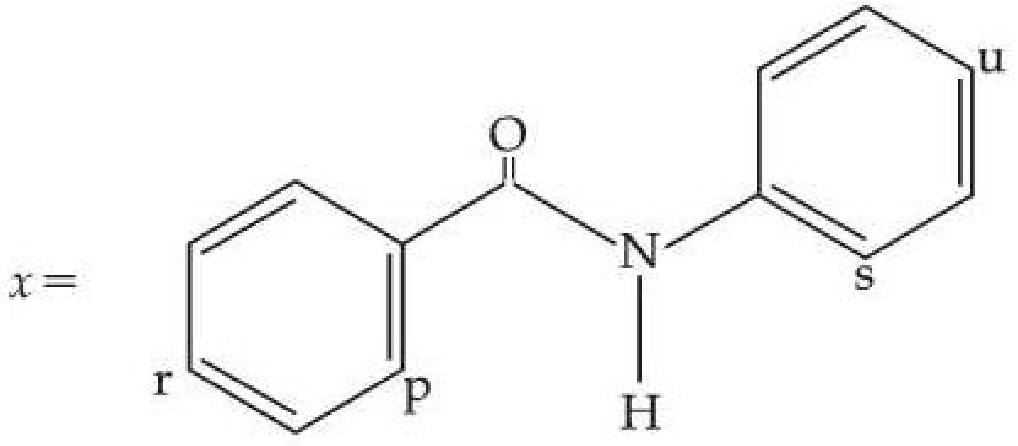
Options
A
Predominantly at ""
B
"" and ""
C
"" and ""
DCorrect
Predominantly at ""
Step-by-Step Solution
To determine the preferred site for electrophilic aromatic substitution in the molecule (benzanilide, ), we analyze the electronic effects of the substituents on both aromatic rings:
-
Comparison of Ring Activation:
- Benzoyl Ring (containing sites and ): This ring is directly attached to the carbonyl group (). The carbonyl group acts as an electron-withdrawing group via resonance () and inductive effects (). As a result, this ring is deactivated toward electrophilic aromatic substitution.
- Anilidic Ring (containing sites and ): This ring is directly attached to the nitrogen atom (). The lone pair of electrons on the nitrogen atom can undergo resonance with the -system of the benzene ring ( effect), significantly increasing the electron density. Thus, this ring is strongly activated toward electrophilic aromatic substitution relative to the benzoyl ring.
-
Regioselectivity on the Activated Ring:
- The group is an ortho/para-directing group.
- Position corresponds to the ortho position relative to the group.
- Position corresponds to the para position relative to the group.
- Due to the bulky nature of the group, the ortho position () experiences significant steric hindrance.
- Therefore, electrophilic attack occurs with high selectivity at the sterically unhindered para position ().
Thus, the preferred site for the attack of the electrophile is predominantly at "".
Correct Option: D (Predominantly at "")