Planarity of Organic Compounds in All Conformations
Amongst the given options, the compound(s) in which all the atoms are in one plane in all the possible conformations (if any), is (are)
Options
A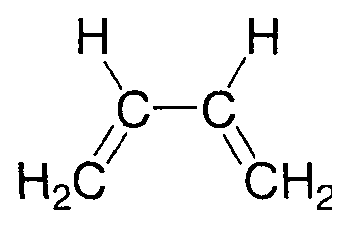
B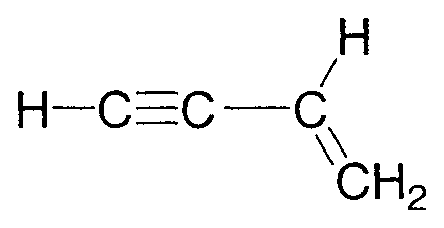 Correct
C
Correct
D
Step-by-Step Solution
To determine which compound(s) have all of their atoms lying in a single plane across all possible conformations, let us analyze each option individually:
-
Option (A): Buta-1,3-diene ()
- The carbon atoms involved in double bonds are -hybridized, giving planar geometry around each vinyl unit.
- However, rotation around the central single bond () allows for conformational changes. During rotation from the s-trans to the s-cis conformation, the molecule passes through non-planar gauche conformations where the two planes are twisted with respect to each other.
- Thus, all atoms are not in one plane in all conformations.
-
Option (B): But-1-en-3-yne ()
- The part of the molecule consists of -hybridized carbons and is strictly linear along the axis of the single bond.
- The part consists of -hybridized carbons and is planar.
- Any conformational rotation around the single bond rotates the linear group around its own axis. Since all atoms of the acetylenic chain lie directly on the axis of rotation, this rotation does not displace any atom out of the plane defined by the group.
- Therefore, all atoms remain in one plane in all possible conformations.
-
Option (C): Ketene ()
- The terminal carbon is -hybridized (trigonal planar), so the two atoms, the terminal , and the central atom lie in the same plane.
- The central carbon is -hybridized with a linear geometry ( angle is ).
- Since the oxygen atom is a single terminal atom, it lies along the internuclear axis of the bond.
- Consequently, all 5 atoms () lie in the plane of the group. Since there are no single bonds to allow conformational rotation, the molecule is strictly planar in all conformations.
-
Option (D): Allene ()
- The central carbon atom is -hybridized and forms two -bonds using orthogonal (perpendicular) -orbitals.
- As a result, the two terminal planes are perpendicular () to each other.
- Thus, allene is non-planar.
Conclusion:
The compounds in which all atoms lie in one plane in all possible conformations are (B) and (C).