Ozonolysis of Natural Rubber and Subsequent Aldol Condensation
Natural rubber on complete ozonolysis () gives compound as the major product. gives positive iodoform and Tollen's tests. on heating with aqueous gives as the major product. is
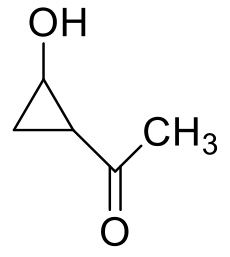
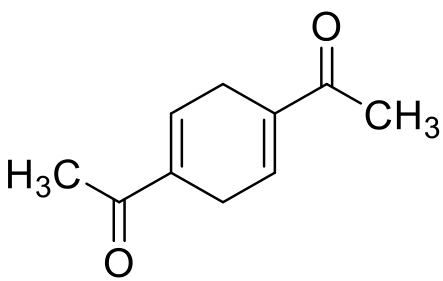
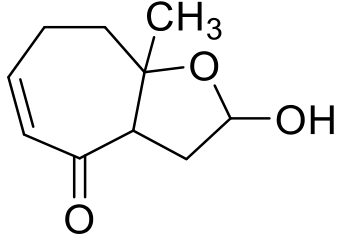
Options
Step-by-Step Solution
1. Structure of Natural Rubber: Natural rubber is cis-1,4-polyisoprene, which consists of the repeating monomeric unit:
2. Reductive Ozonolysis: Complete reductive ozonolysis () of natural rubber cleaves the double bonds in the polymer chain to yield 4-oxopentanal (levulinic aldehyde) as the major monomeric product :
3. Confirmatory Tests for Compound :
- Tollen's Test: Compound contains a terminal aldehyde group (), giving a positive Tollen's test (silver mirror).
- Iodoform Test: Compound contains a methyl ketone group (), giving a positive iodoform test (yellow precipitate of ).
4. Intramolecular Aldol Condensation: Numbering the carbon chain of 4-oxopentanal () as follows:
When is treated with aqueous and heated:
-
Enolate Formation: Base deprotonates the -carbon of the methyl group () to generate an enolate nucleophile. Deprotonation at is preferred over because attack from onto the aldehyde carbon () forms a thermodynamically stable 5-membered ring.
-
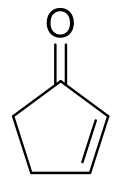
Ring Closure: The enolate carbon () attacks the more reactive electrophilic aldehyde carbon (), yielding a 5-membered -hydroxy ketone intermediate (3-hydroxycyclopentanone).
-
Dehydration: Upon heating, dehydration (elimination of ) occurs to yield an -unsaturated ketone, cyclopent-2-en-1-one, as the major product .
This structure matches Option (A).