Match Organic Compounds with Characteristic Tests and Reactions
Match the compounds in Column I with their characteristic test(s)/reaction(s) given in Column II. Indicate your answer by darkening the appropriate bubbles of the matrix given in the ORS.
Column I
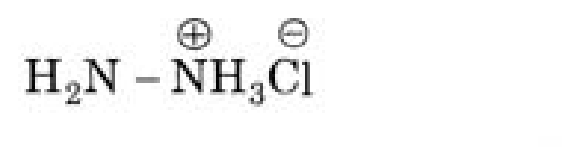
(A)
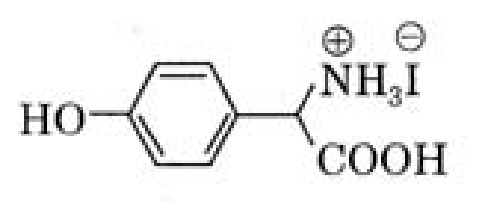
(B)
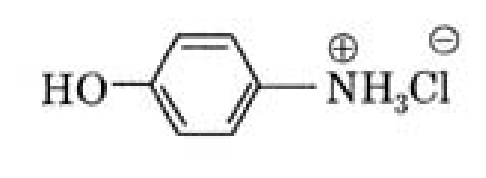
(C)
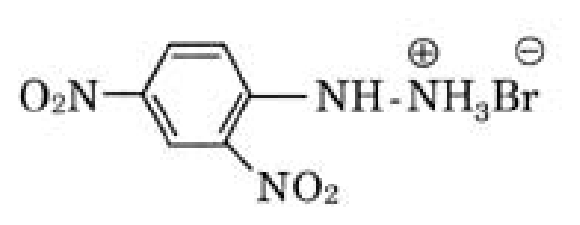
(D)
Column II
(p) sodium fusion extract of the compound gives Prussian blue colour with
(q) gives positive test
(r) gives white precipitate with
(s) reacts with aldehydes to form the corresponding hydrazone derivative
Options
A
Correct
B
C
D
Topics & Concepts
Step-by-Step Solution
To find the correct matches between Column I and Column II, we evaluate the properties and characteristic reactions of each compound:
Analysis of Tests/Reactions in Column II:
-
(p) Sodium fusion extract gives Prussian blue colour with :
- This is Lassaigne's test for the detection of nitrogen in organic compounds containing both carbon and nitrogen:
- Compounds containing nitrogen along with carbon (compounds B, C, and D) give this test.
- Compound A does not contain carbon, hence it does not form cyanide () and gives a negative test.
- Matches: (B) p, (C) p, (D) p
- This is Lassaigne's test for the detection of nitrogen in organic compounds containing both carbon and nitrogen:
-
(q) Gives positive test:
- Neutral ferric chloride () reacts with compounds having a phenolic group to form characteristic colored coordination complexes.
- Compounds B () and C () possess a phenolic group, so they give a positive test.
- Matches: (B) q, (C) q
-
(r) Gives white precipitate with :
- Silver nitrate reacts with free halide ions in aqueous solution:
- Only chloride salts produce a white precipitate. Thus, compounds A and C (which contain ) give a white precipitate with .
- Matches: (A) r, (C) r
- Silver nitrate reacts with free halide ions in aqueous solution:
-
(s) Reacts with aldehydes to form the corresponding hydrazone derivative:
- Hydrazine () and substituted hydrazines (such as 2,4-dinitrophenylhydrazine) react with aldehydes to form hydrazones:
- Compounds A (hydrazinium chloride) and D (2,4-dinitrophenylhydrazinium bromide) can react with aldehydes to form hydrazone derivatives.
- (Note: In the official JEE Advanced evaluation, both the inclusion and exclusion of (s) for (A) and (D) were accepted).
- Matches: (A) s, (D) s (or not matching if only free base is considered).
- Hydrazine () and substituted hydrazines (such as 2,4-dinitrophenylhydrazine) react with aldehydes to form hydrazones:
Final Match:
- (A) r or (r, s)
- (B) p, q
- (C) p, q, r
- (D) p or (p, s)