Major Products of Nitration for Substituted Aromatic Compounds P Q and S
The compounds P, Q and S
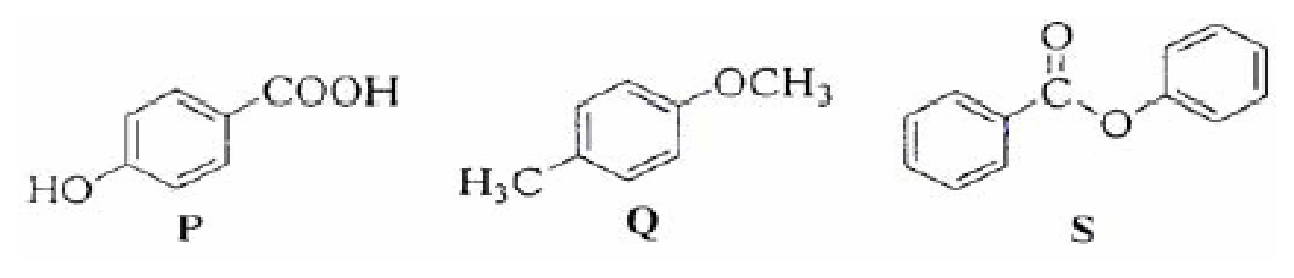
were separately subjected to nitration using mixture. The major product formed in each case respectively, is
Options
A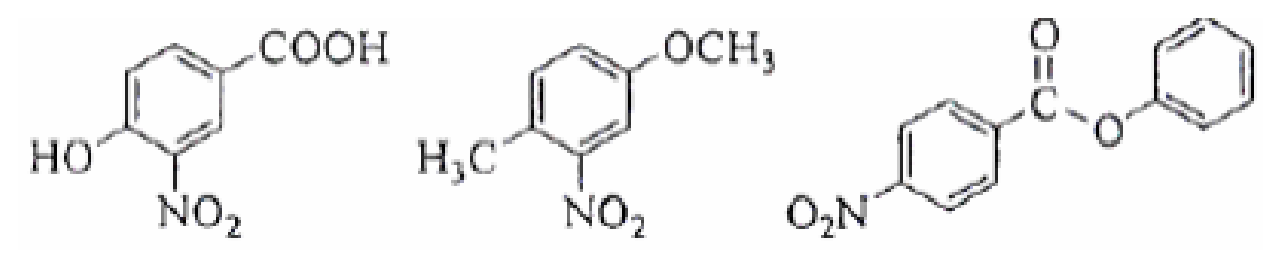
B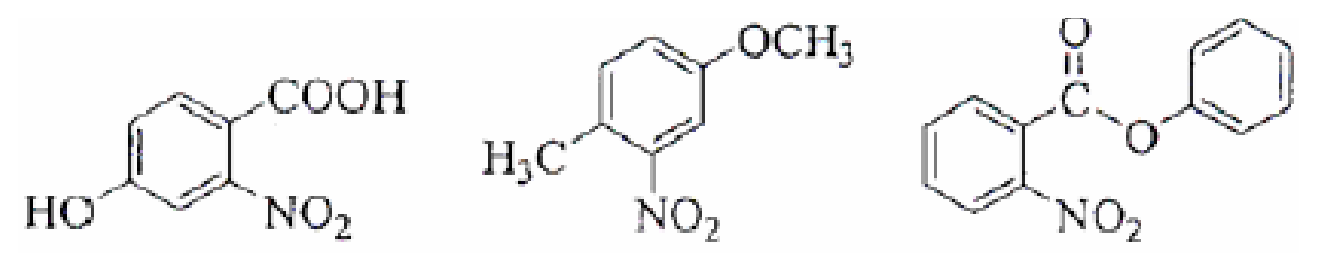
C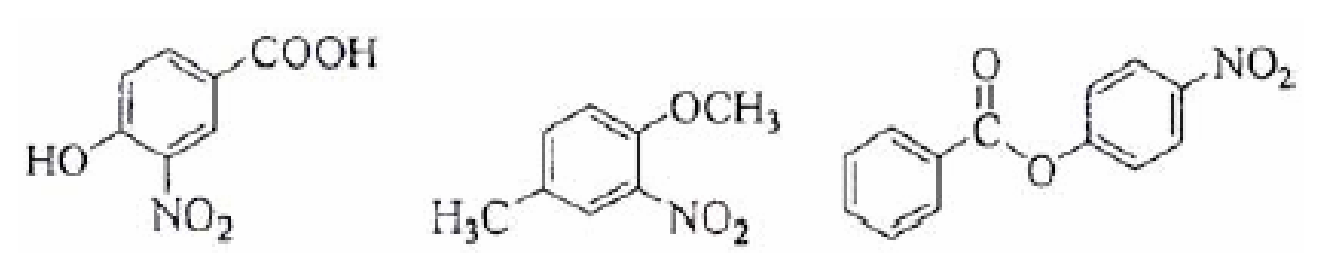 Correct
D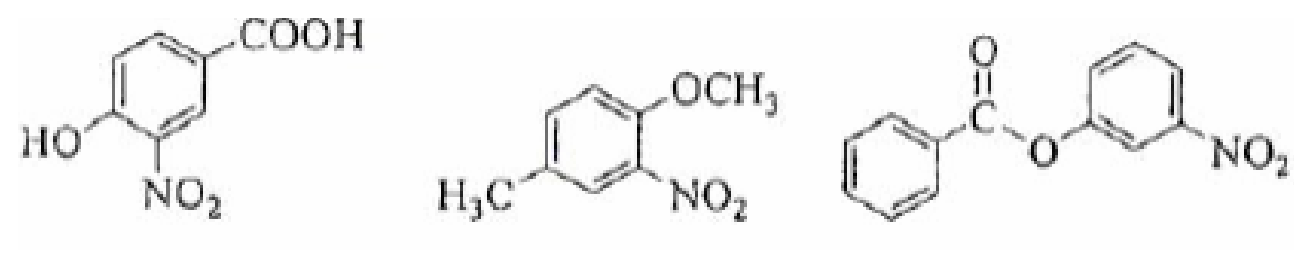
Step-by-Step Solution
To determine the major products formed upon nitration of the compounds , , and , we analyze the directing effects and activation levels of the substituents on the aromatic rings in Electrophilic Aromatic Substitution ().
General Principle of Regioselectivity in EAS:
- Activating vs. Deactivating Groups: If an aromatic ring has multiple substituents directing to different positions, the regiochemistry is governed primarily by the strongest activating group (highest electron-donating ability).
- Substituent Strength Order:
- Steric Effects: For -directing groups, the para position is typically favored over the ortho position due to steric hindrance, provided the para position is vacant.
1. Compound P (4-hydroxybenzoic acid):
-
Substituents present:
- group at position 1 (Strong group, highly activating, -directing).
- group at position 4 (Strong group, deactivating, -directing).
-
Directing Effect:
- Since is strongly activating and is deactivating, the orientation of the incoming nitronium ion () is strictly controlled by the group.
- The position para to is occupied by the group.
- Therefore, substitution takes place at the position ortho to the group (position 2 or 6).
2. Compound Q (1-methoxy-4-methylbenzene / -methylanisole):
-
Substituents present:
- group at position 1 (Strong group, strongly activating, -directing).
- group at position 4 (Hyperconjugative and inductive group, moderately activating, -directing).
-
Directing Effect:
- Resonance activation () by the lone pairs on the oxygen atom of is significantly stronger than the hyperconjugative activation () of the group.
- Thus, the reaction is directed by the group.
- The position para to is occupied by the group.
- Therefore, nitration occurs at the position ortho to the group.
3. Compound S (Phenyl benzoate):
-
Structure:
-
Ring Activation Analysis:
- Benzoyl Ring (): The ring is directly attached to a carbonyl carbon, which pulls electron density away via and effects. This ring is deactivated.
- Phenoxy Ring (): The ring is directly attached to an oxygen atom whose lone pairs donate electron density into the ring via effect. This ring is strongly activated.
-
Directing Effect:
- Electrophilic attack occurs exclusively on the more electron-rich, activated phenoxy ring.
- The ester oxygen atom acts as an -director for the phenoxy ring.
- Due to lower steric hindrance, attack at the para position relative to the ester oxygen atom yields the major product.
Conclusion:
- Compound P: enters ortho to .
- Compound Q: enters ortho to .
- Compound S: enters para to on the phenoxy ring.
This set of major products corresponds to Option C.