Major Product in Reduction and Hydrolysis of Amide
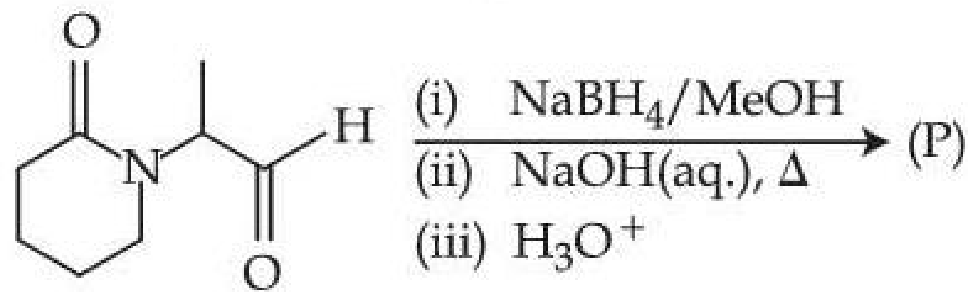
Consider the following reaction.
The major product formed is :
Options
A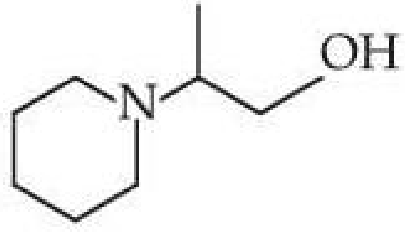
B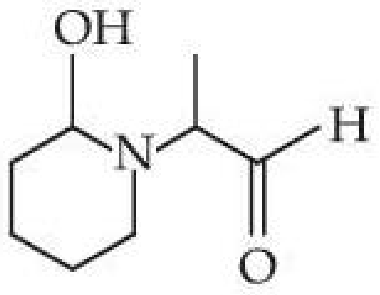
C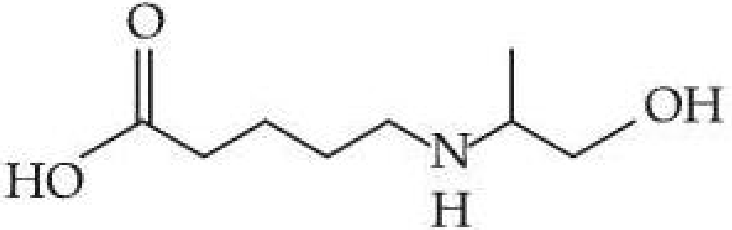 Correct
D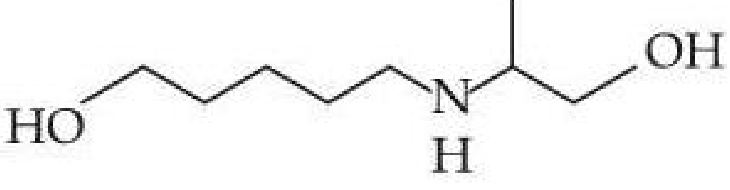
Topics & Concepts
Step-by-Step Solution
To determine the major product formed in the given reaction sequence, we analyze each step sequentially:
Step 1: Selective Reduction using
- Starting Material: The reactant contains two functional groups: an aldehyde group () in the side chain and a cyclic amide (-lactam) group in the ring.
- Reagent: Sodium borohydride () in methanol () is a mild reducing agent.
- Reaction: selectively reduces aldehydes and ketones to primary and secondary alcohols, respectively, while leaving amides unreacted.
- Intermediate: The aldehyde group () is reduced to a primary alcohol ():
Step 2 & 3: Hydrolysis of the Lactam ( followed by )
- Reagent: Aqueous sodium hydroxide () with heating () hydrolyzes the amide bond (lactam ring).
- Mechanism:
- Base-catalyzed cleavage of the cyclic amide bond occurs via nucleophilic acyl substitution on the ring carbonyl carbon, causing the 6-membered ring to open.
- This process yields a carboxylate ion at one end and a secondary amine at the other end:
- Acidification with protonates the carboxylate group to form a carboxylic acid ().
Final Product Structure:
Combining both transformations, the final product is 5-((1-hydroxypropan-2-yl)amino)pentanoic acid:
This matches the chemical structure shown in Option C.