Intramolecular Aldol Condensation of Hexane-1,6-dial
Cyclohexene on ozonolysis followed by reaction with zinc dust and water gives compound . Compound on further treatment with aqueous yields compound . Compound is
Options
A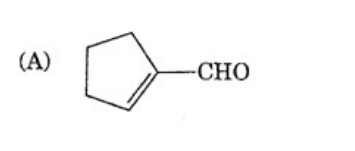 Correct
B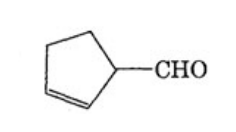
C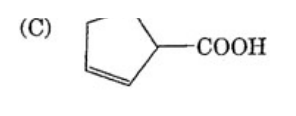
D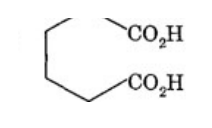
Step-by-Step Solution
-
Reductive Ozonolysis:
Cyclohexene undergoes reductive ozonolysis with followed by to cleave the double bond, giving hexane-1,6-dial (adipaldehyde):
-
Intramolecular Aldol Condensation:
Treatment of hexane-1,6-dial with aqueous initiates an intramolecular aldol condensation. An enolate formed at C-2 attacks the carbonyl carbon C-6, forming a stable 5-membered cyclic -hydroxyaldehyde. Subsequent dehydration (loss of ) yields cyclopent-1-enecarbaldehyde (1-cyclopentenecarboxaldehyde):
This matches the structure in Option A.
Correct Answer: A