Identify Major Product in Intramolecular Cyclization via Grignard Addition
Determine the major organic product formed in the following reaction sequence:

Options
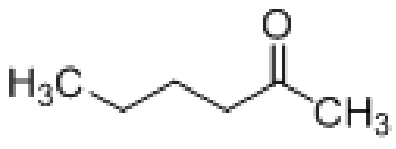
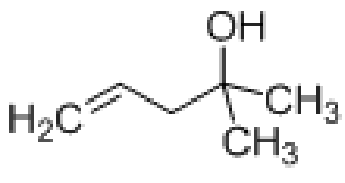
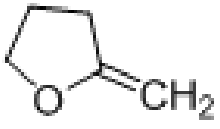
Topics & Concepts
Step-by-Step Solution
To determine the major organic product of the reaction, let us break down the reaction mechanism step-by-step:
Step 1: Nucleophilic Addition of the Grignard Reagent
The starting material is 5-chloropentan-2-one ().
When treated with methylmagnesium bromide () in dry ether at , the nucleophilic methyl carbanion () attacks the electrophilic carbonyl carbon ():
This forms a magnesium alkoxide intermediate containing a primary alkyl chloride tail.
Step 2: Intramolecular Cyclization
The alkoxide oxygen () acts as a strong internal nucleophile. It performs an intramolecular nucleophilic substitution () reaction by attacking the primary carbon () bearing the chlorine leaving group ():
Counting the atoms involved in the ring formation:
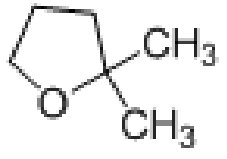
This forms a highly stable 5-membered cyclic ether (a substituted tetrahydrofuran ring) with two methyl groups () attached to the carbon adjacent to the oxygen atom ().
Step 3: Acidic Workup
Subsequent treatment with aqueous acid () hydrolyzes any remaining magnesium salts, yielding 2,2-dimethyltetrahydrofuran as the final major product.
This corresponds to the structure shown in Option (D).
Correct Answer: (D)