Identify Compound Giving Strongest Conjugate Acid Among Substituted Anilines
The strongest conjugate acid will result from:
Options
A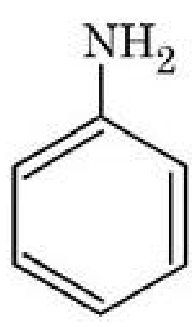
B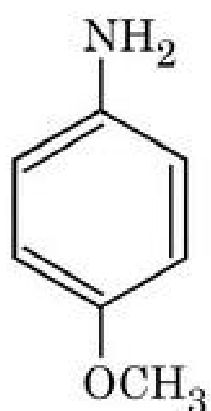
C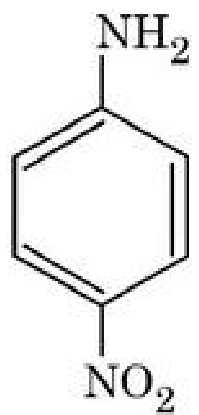 Correct
D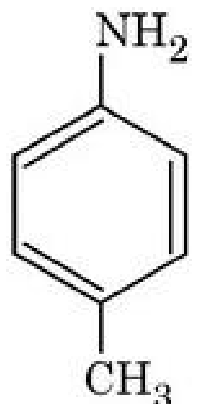
Topics & Concepts
Step-by-Step Solution
To determine which compound forms the strongest conjugate acid, we use the fundamental concept of acid-base conjugate pairs:
The strength of a conjugate acid is inversely related to the strength of its corresponding base. That is:
Thus, the weakest base will yield the strongest conjugate acid.
Step-by-Step Analysis of the Given Compounds
-
Option A: Aniline ()
- Standard reference compound without any additional substituents on the benzene ring.
-
Option B: 4-Methoxyaniline (-anisidine)
- The methoxy group () exerts a strong electron-donating mesomeric effect () at the -position, increasing the electron density on the nitrogen atom. This makes it a stronger base than aniline.
-
Option C: 4-Nitroaniline (-nitroaniline)
- The nitro group () exerts very strong electron-withdrawing mesomeric () and inductive () effects at the -position. This drastically decreases the electron density on the nitrogen atom, stabilizing the free base form less and severely reducing its tendency to accept a proton. Thus, 4-nitroaniline is the weakest base among all choices.
-
Option D: 4-Methylaniline (-toluidine)
- The methyl group () exerts electron-donating hyperconjugative and inductive () effects, increasing the basicity relative to aniline.
Order of Basicity:
Order of Strength of Conjugate Acids:
Since 4-nitroaniline is the weakest base, its protonated form (-nitroanilinium ion, ) is the strongest conjugate acid.
Correct Option: C