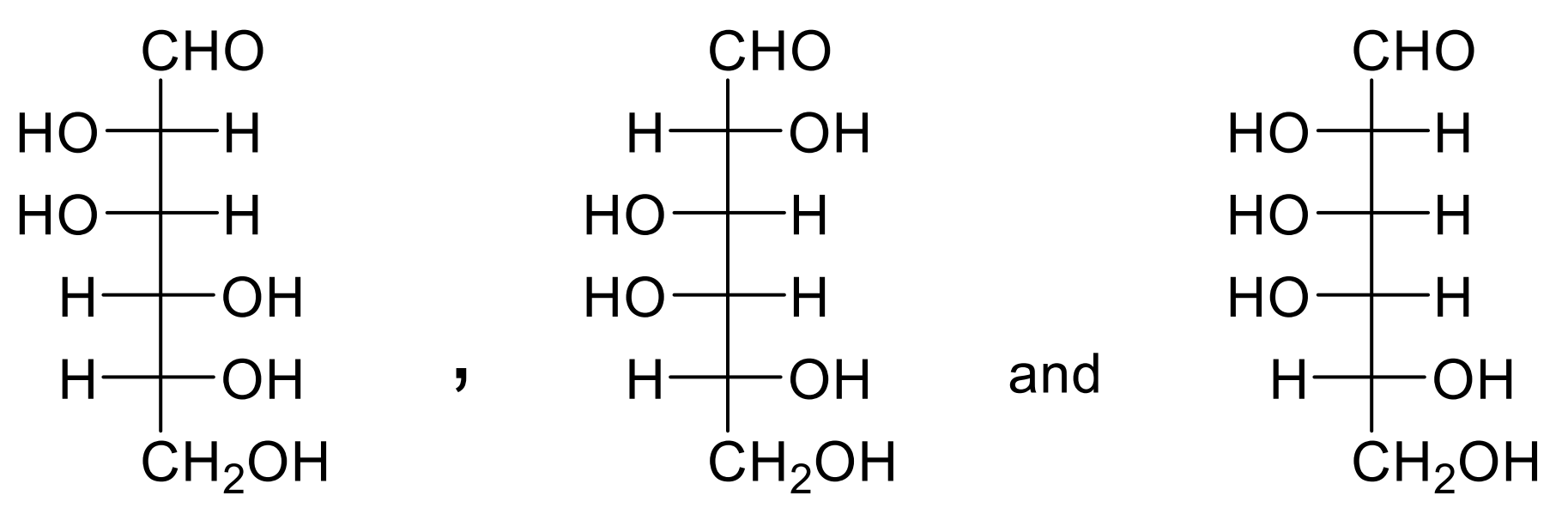
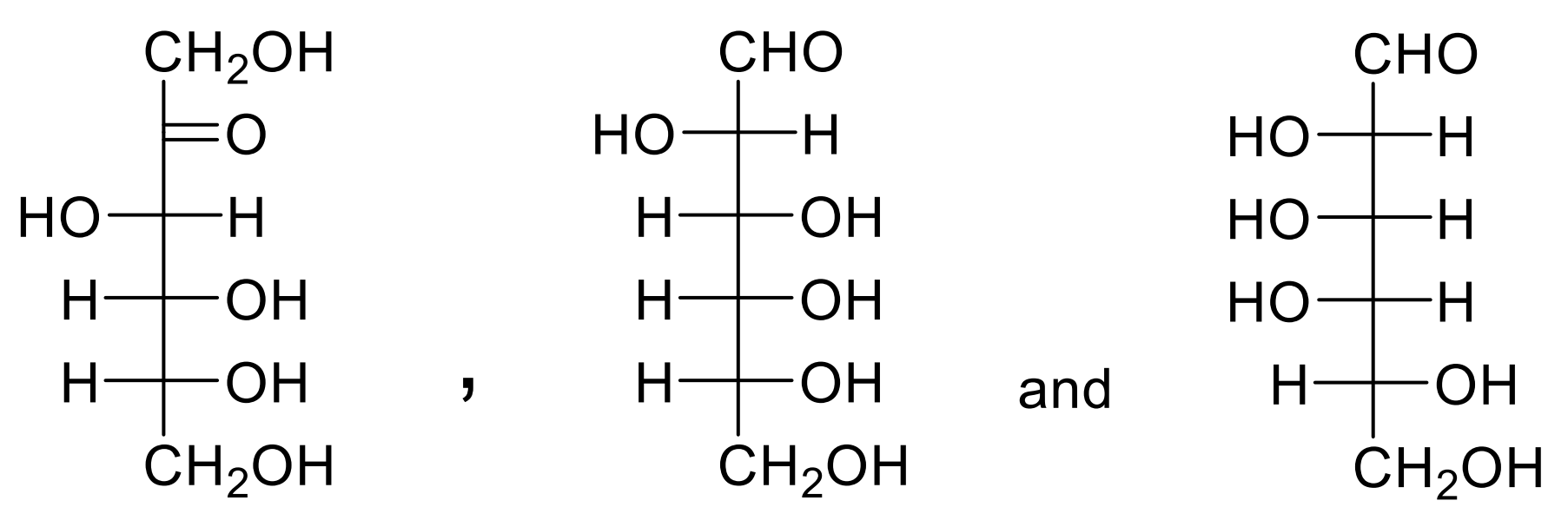
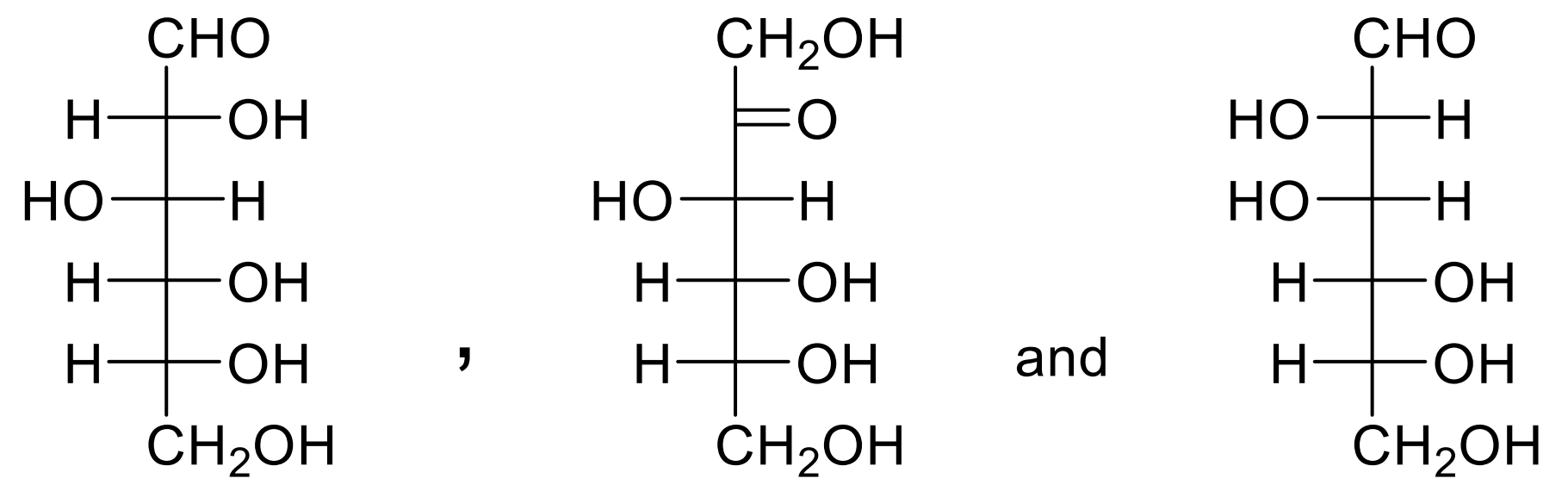
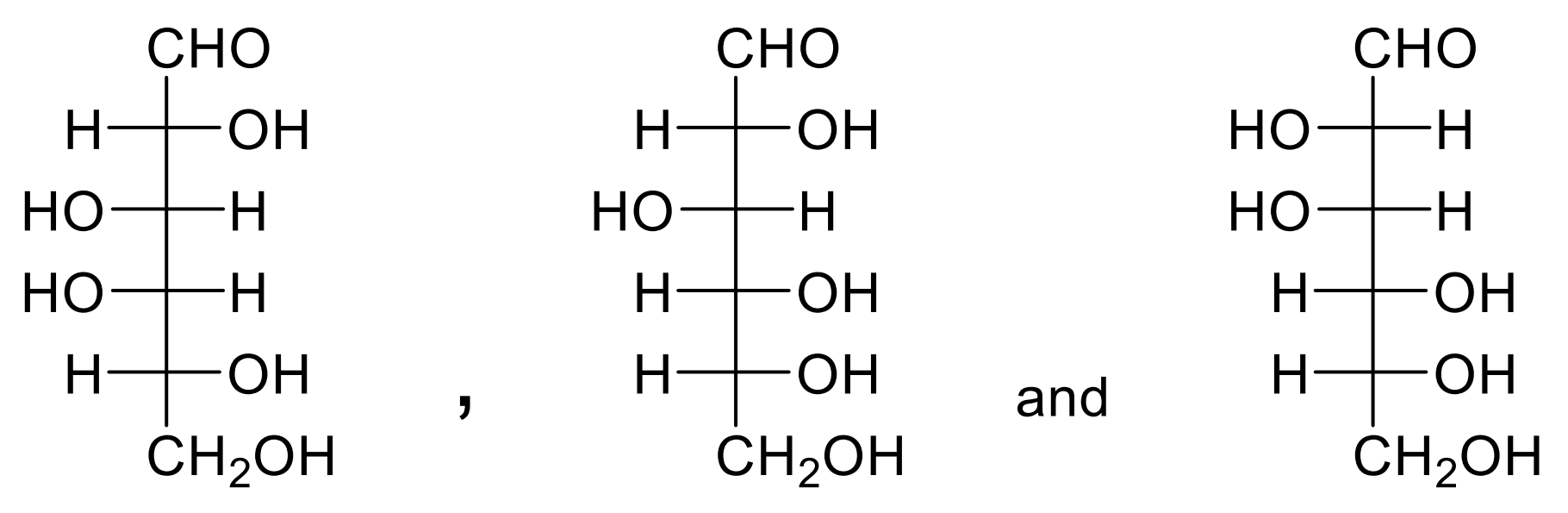
When D-glucose is treated with aqueous sodium hydroxide (NaOH), it undergoes a base-catalyzed keto-enol tautomerization known as the Lobry de Bruyn-Alberda van Ekenstein rearrangement.
Reaction Mechanism
Formation of Enolate/Enediol Intermediate:
The base (OH−) abstracts the acidic α-hydrogen atom from C-2 of D-glucose to form a resonance-stabilized enolate anion, which picks up a proton from water to form a 1,2-enediol intermediate:
D-Glucose−H2OOH−Enolate Ion+H2O1,2-Enediol
The structure of the 1,2-enediol intermediate is:
HO-CH=C(OH)-(CHOH)3-CH2OH
Tautomerization to D-Mannose:
Reprotonation at the C-2 position from the opposite face of the enediol double bond converts the intermediate into the C-2 epimer of D-glucose, which is D-mannose.
Tautomerization to D-Fructose:
Proton transfer at the C-1 oxygen followed by ketonization converts the enediol into the ketose form, which is D-fructose.
Thus, the reaction produces an equilibrium mixture containing: