Boiling and Melting Point Comparison of Alkyl Halides and Dichlorobenzenes
Given below are two statements:
Statement I : Due to increase in van der Waals forces, the order of boiling points is .
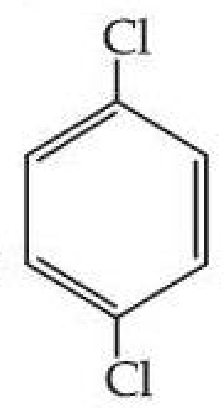
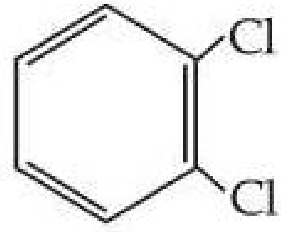
Statement II : As 1,4-dichlorobenzene is more symmetric, its melting point is higher than 1,2-dichlorobenzene, however its boiling point is lower than 1,2-dichlorobenzene.
In the light of the above statements, choose the correct answer from the options given below :
Options
Both Statement I and Statement II are true
Both Statement I and Statement II are false
Statement I is true but Statement II is false
Statement I is false but Statement II is true
Topics & Concepts
Step-by-Step Solution
To determine the correctness of the two statements, let us analyze them individually:
Analysis of Statement I:
-
Van der Waals Forces and Alkyl Group Size: For a homologous series of alkyl halides containing the same halogen atom (), as the length of the alkyl chain increases from methyl () to ethyl () to -propyl (), the overall molecular mass and surface area of the molecule increase.
-
Effect on Boiling Point: A larger surface area leads to stronger intermolecular van der Waals forces (specifically London dispersion forces). Consequently, more energy is required to separate the molecules during phase transition from liquid to gas. Thus, the boiling point follows the order:
Therefore, Statement I is true.
Analysis of Statement II:
-
Melting Point Comparison: -dichlorobenzene (-dichlorobenzene) possesses a symmetrical, linear structure compared to -dichlorobenzene (-dichlorobenzene). Due to its high symmetry, -dichlorobenzene fits more compactly into its crystal lattice, leading to stronger intermolecular lattice forces.
- Melting point of -dichlorobenzene
- Melting point of -dichlorobenzene
Thus, the melting point of -dichlorobenzene is indeed higher than that of -dichlorobenzene.
-
Boiling Point Comparison: Boiling point is determined by dipole-dipole interactions and dispersion forces in the liquid state. -dichlorobenzene has a higher dipole moment () than -dichlorobenzene ( due to symmetry cancellation).
- Boiling point of -dichlorobenzene
- Boiling point of -dichlorobenzene
Thus, the boiling point of -dichlorobenzene is lower than that of -dichlorobenzene.
Therefore, Statement II is true.
Conclusion:
Both Statement I and Statement II are correct.
Correct Option: A (Both Statement I and Statement II are true)